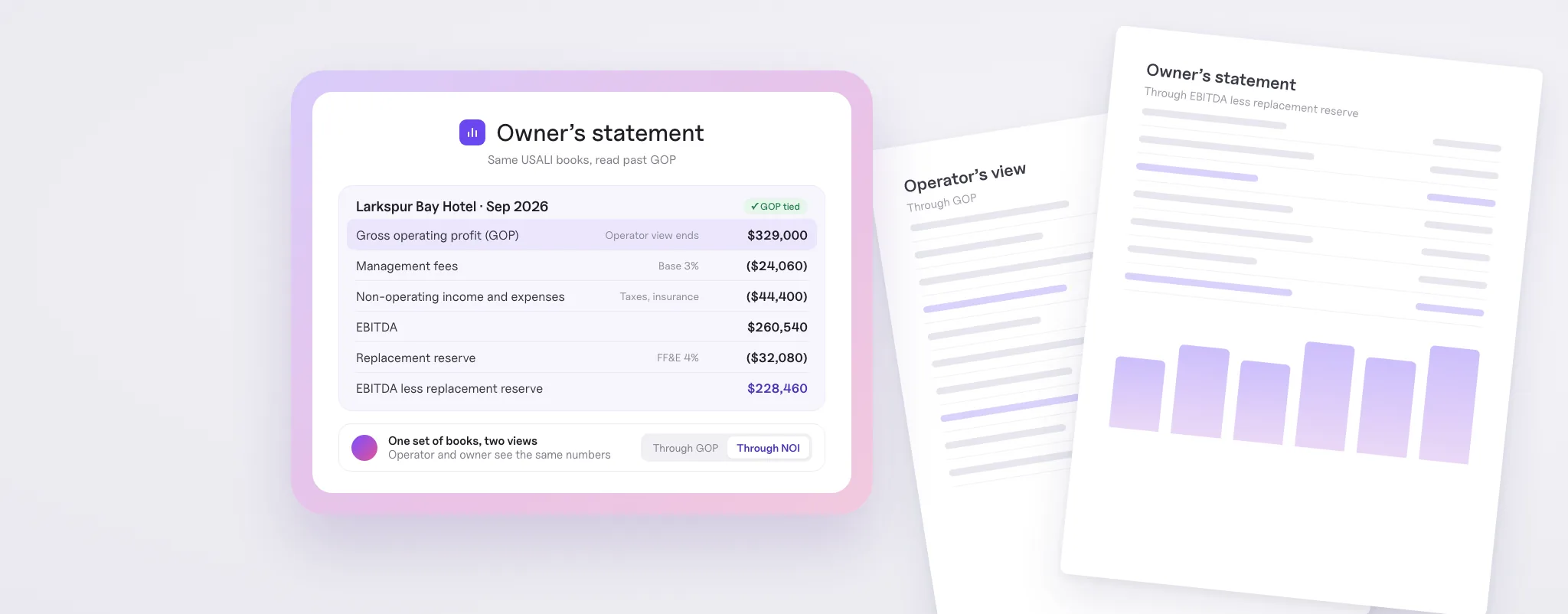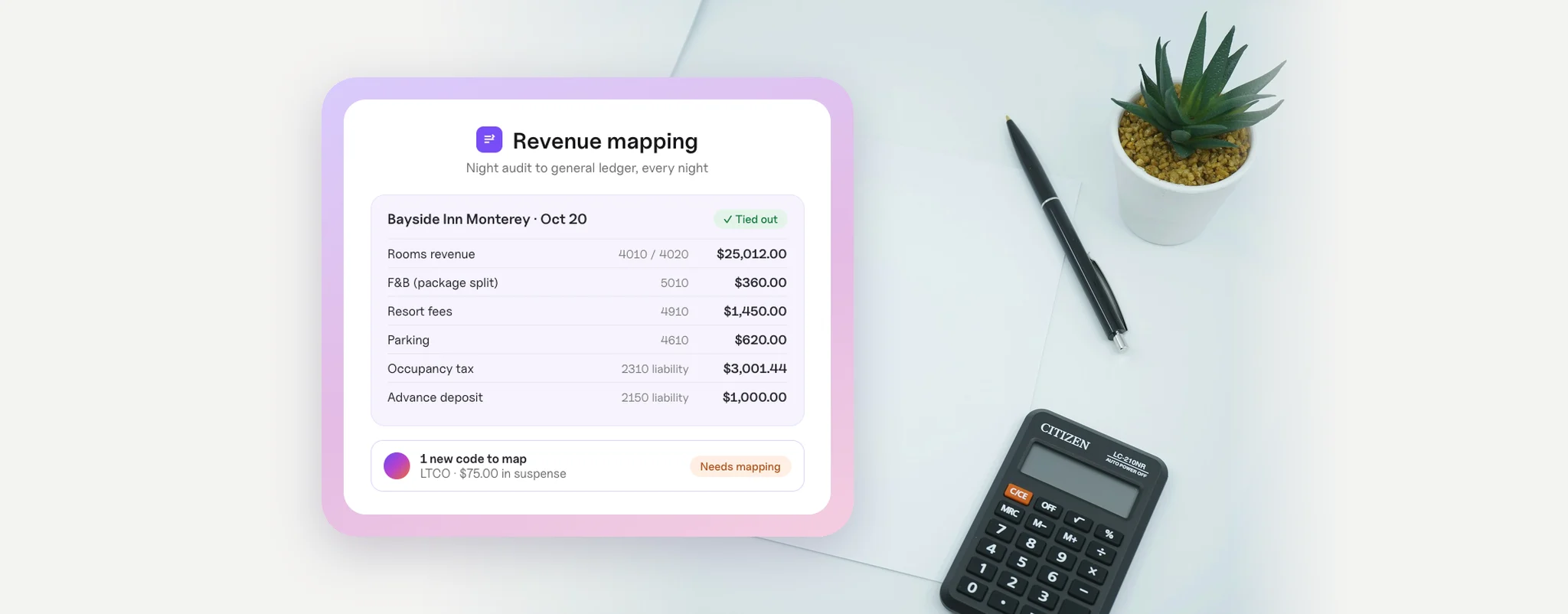
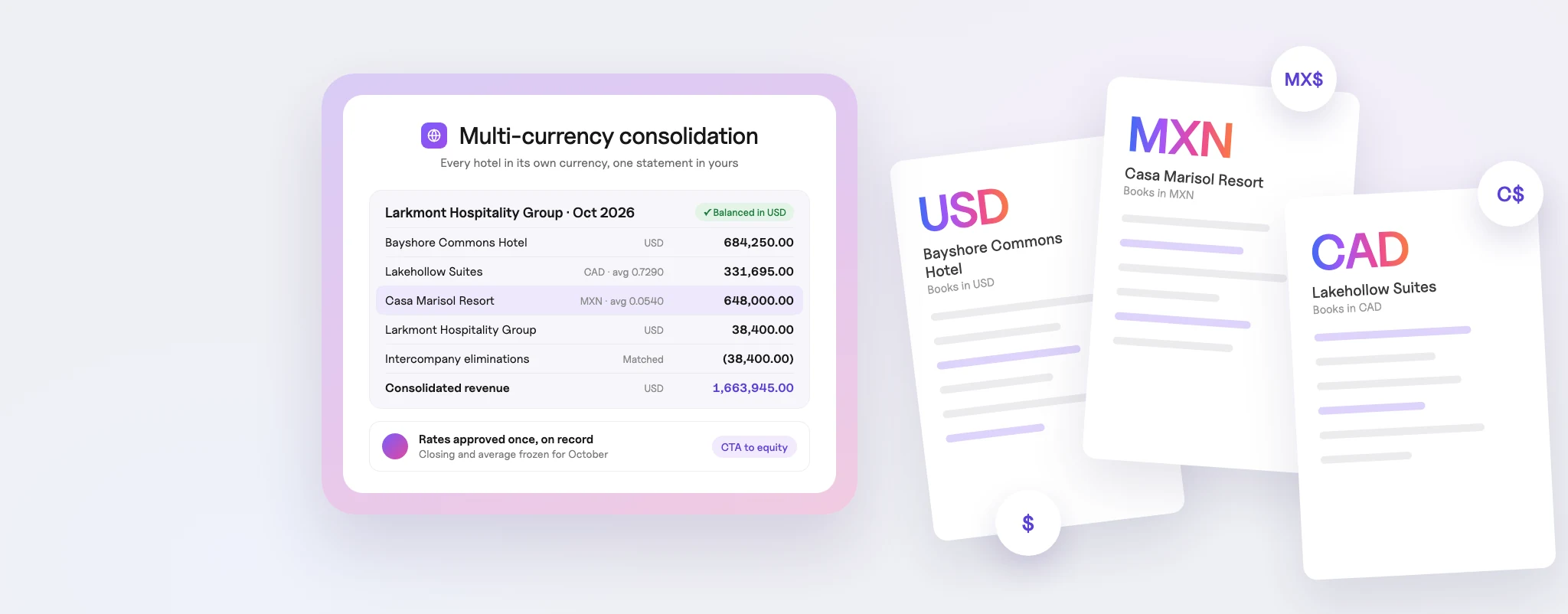
It’s the third business day of the month. Your U.S. hotels have closed, but the resort in Mexico books in pesos and the hotel in Canada books in Canadian dollars. Before anyone can say what the portfolio earned, someone has to translate three sets of books and rebuild intercompany eliminations in a workbook.
That’s the problem multi-currency accounting creates for hotel groups that cross borders. Here’s what it involves, where it breaks down, and how we built Docyt to handle it.
Multi-currency accounting vs. multi-entity consolidation
The two terms often get used interchangeably, but they solve different problems. Multi-entity consolidation combines several legal entities, such as each hotel’s LLC and the management company, into one set of statements and eliminates activity between them. An all-USD portfolio needs it every month.
Multi-currency accounting handles more than one currency, from a single vendor bill in pesos to translating a hotel’s entire books. Multi-currency consolidation is where the two meet: consolidating entities that keep their books in different currencies.
What multi-currency consolidation involves
Two terms come first. Functional currency is the currency each hotel operates in and keeps its books in. Reporting currency is the currency the consolidated statements are presented in, usually the one your owners, board or lenders read.
Each hotel is translated from its functional currency into the reporting currency before the books are combined. Under the approach most U.S. groups follow:
- Balance sheet accounts translate at the closing rate on the last day of the period.
- Income statement accounts translate at the average rate for the period.
- Equity accounts stay at historical rates.
Because different rates apply to different statements, a translated hotel’s books won’t balance on their own. The difference goes to a separate equity line called the cumulative translation adjustment (CTA). Confirm the treatment for your entities with your accountant.
A simple example
Take a hypothetical U.S. group reporting in dollars, with a resort in Mexico:
| Item | MXN | Rate (illustrative) | USD |
|---|---|---|---|
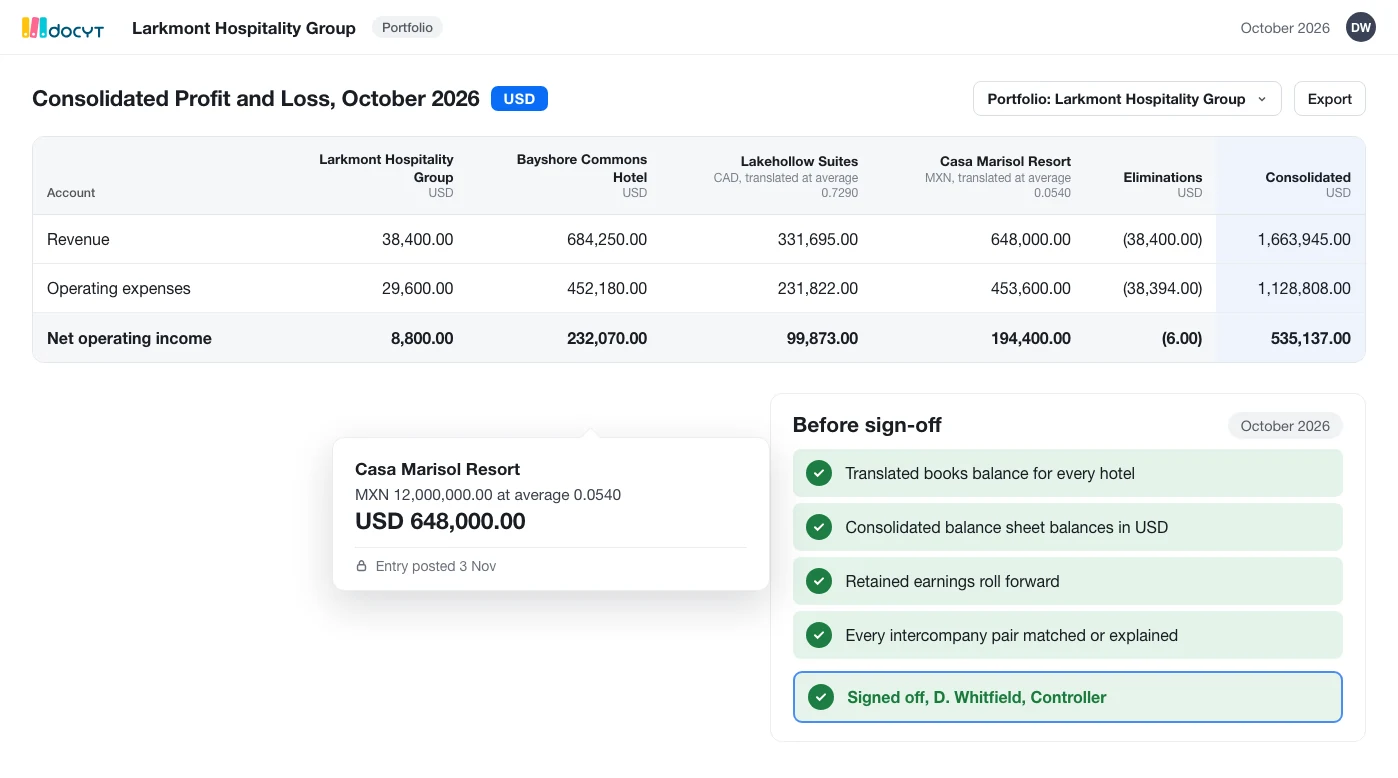
| October revenue | 12,000,000 | 0.0540 average | $648,000 |
| Cash at October 31 | 3,000,000 | 0.0530 closing | $159,000 |
Revenue uses the month’s average rate, and cash uses the month-end rate. Apply that to every line and the result is a translated statement plus a CTA balance.
Where multi-currency accounting breaks down
Rates live in spreadsheets. Someone pastes rates into a tab, and when auditors ask who approved them, the answer is hard to find. Tax rules add another layer: the IRS generally expects the rate in effect when an item is received, paid or accrued.
Intercompany doesn’t tie. A management fee booked in dollars by the management company and in pesos by the resort won’t match after translation, even when both sides are right.
Some hotels keep books elsewhere. An acquired property or one run by a local firm reports from its own system but still has to land in the same close.
Vendors bill in other currencies. Bills in pesos or euros must be booked at the day’s rate, revalued if still open at month-end, and settled with a gain or loss.
How Docyt handles multi-currency accounting
Docyt’s AI agents handle daily accounting, payments and reporting, and our multi-entity consolidation brings every hotel into one close and one statement, in any currency.
Each hotel books in its own currency. Set each hotel’s functional currency and the portfolio’s reporting currency once. Supported currencies include USD, CAD, MXN, EUR, GBP and AUD.
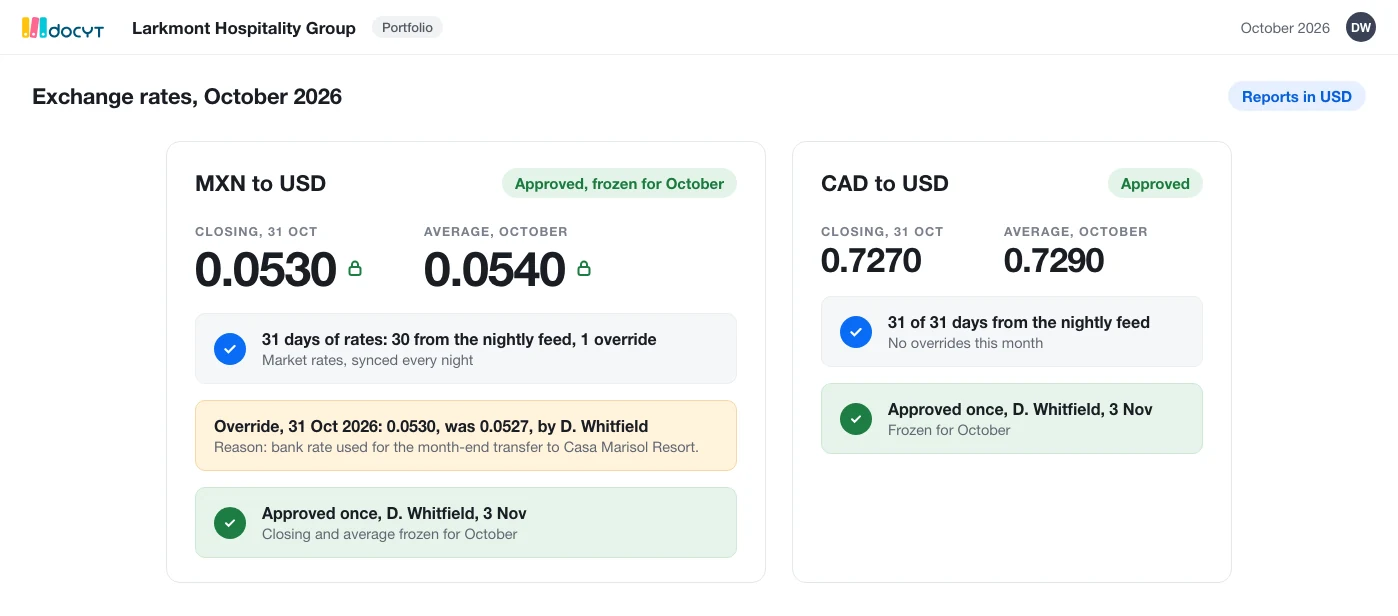
Rates are on record, not in a spreadsheet. Market rates arrive every night. Your controller approves the month’s closing and average rates once, the rates freeze, and every override carries a reason and a name.
Intercompany is matched and eliminated. Management fees, shared costs and loans between hotels are matched on both sides and eliminated in full. Rate-only differences go to equity as a translation adjustment, and any other difference is explained before the month locks.
Hotels on other systems still consolidate. Their results arrive monthly in their own currency and are translated and eliminated the same way.
Foreign-currency bills are handled day to day. Enter the bill as sent. Docyt books it at that day’s rate, keeps the original amount, revalues open balances at month-end and posts the gain or loss when you pay.
Four checks before sign-off
- Translated books balance for every hotel.
- The consolidated balance sheet balances in the reporting currency.
- Retained earnings roll forward from the prior month.
- Every intercompany pair is matched or explained.
The result is one statement in your reporting currency, with eliminations in their own column and CTA on its own equity line. These checks sit inside the broader close covered in our hotel month-end close checklist.
Standards keep evolving too: the USALI 12th Revised Edition, adopted January 1, 2026, added a section for all-inclusive hotels, common in resort markets outside the U.S.
Summary overview
- Multi-entity consolidation combines entities; multi-currency accounting handles currencies. Multi-currency consolidation does both.
- Balance sheets use closing rates, income statements use average rates, and the difference goes to CTA in equity.
- Manual rate tabs, intercompany mismatches and hotels on other systems slow down the close.
- Docyt keeps rates on record, matches and eliminates intercompany, and consolidates hotels on other systems.
- Four checks run before sign-off, producing one statement in your reporting currency.
Running hotels in more than one country? Schedule time with Docyt to see multi-currency consolidation for your portfolio.