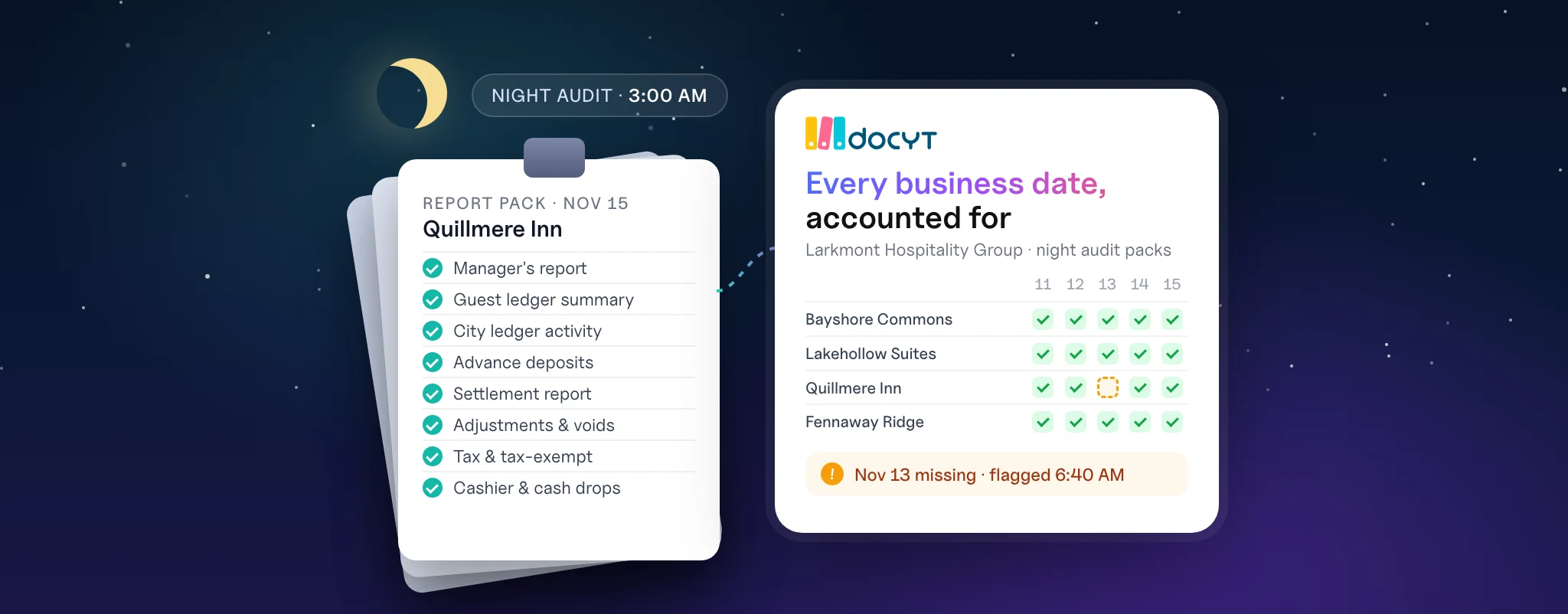
A hotel PMS integration rarely fails loudly. There is no alarm at the front desk and no error on the GM’s screen. The feed simply stops, sends half a day, or posts revenue to the wrong account. The books look normal until month-end reconciliation, when someone discovers that weeks of revenue need to be rebuilt by hand.
For controllers and multi-property finance teams, that cleanup is avoidable. The fix is not a better month-end process. It is a short daily routine that confirms every feed arrived complete and correct.
In this article: Why it matters now | Four silent failures | Why month-end is too late | Five daily checks | How finance teams automate this
Why Silent Feed Failures Matter More Now
Hotel reporting depends on clean data feeds more than ever. In the Hospitality Asset Managers Association’s Fall 2026 survey, 71 percent of asset managers said their hotels use AI in a meaningful way for reporting or analysis. Those reports are only as reliable as the PMS and POS data underneath them.
At the same time, fewer people are watching. In an AHLA survey of 246 hoteliers, more than half said their properties are somewhat or severely understaffed. Lean teams rarely have time to spot a quiet data gap on their own.
Four Ways a PMS or POS Integration Fails Silently
- The feed stops. An expired credential, a system upgrade, or a network change ends the connection, and no data arrives.
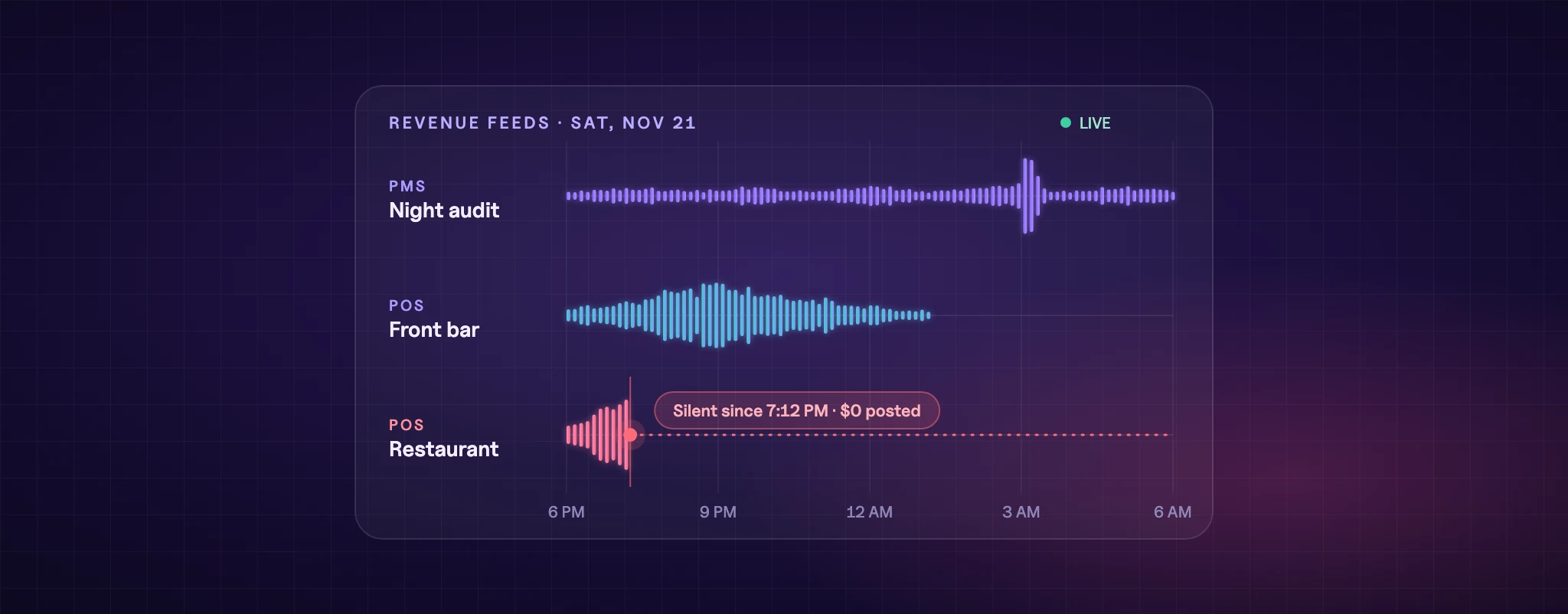
- A partial day posts. Data arrives, but one outlet or revenue center is missing, often after a new POS terminal or outlet is added.
- A day posts twice. A rerun night audit sends the same business date again, doubling revenue.
- Mapping drifts. A new charge code or menu item is not mapped, so revenue lands in a suspense account or the wrong USALI line.
Why Month-End Is Too Late
Every undetected day compounds the work. Missing revenue must be pulled from source reports, re-entered, and reconciled again. Deposits sit unmatched, and daily flash reports already sent to owners were wrong. A problem that takes minutes to fix on day two can take days to unwind on day thirty.
Five Daily Checks That Catch a Broken Feed
- Confirm completeness. Every property should have revenue posted for every business date.
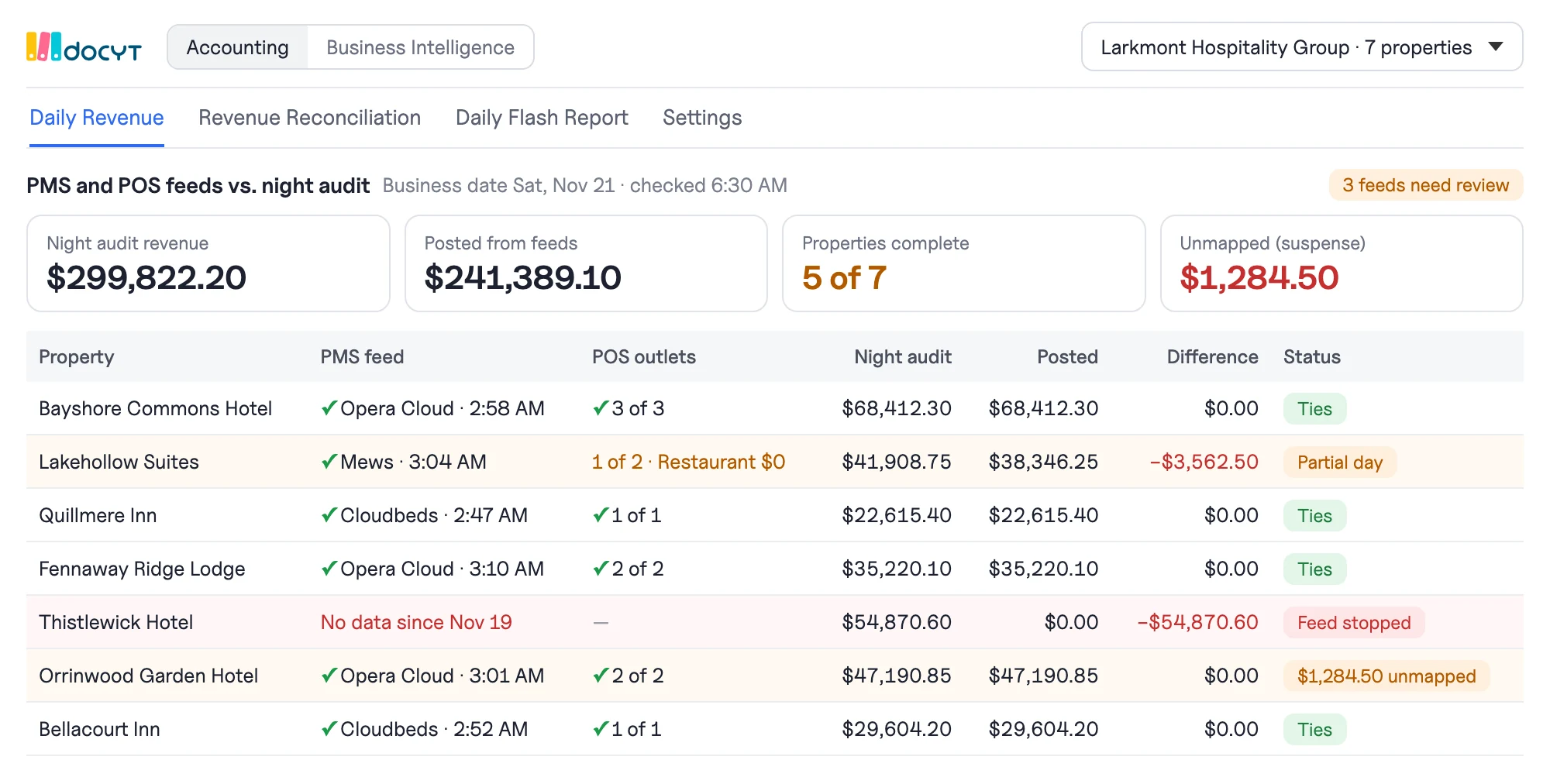
- Tie feed totals to the night audit. Posted revenue should equal the manager’s report for the same date.
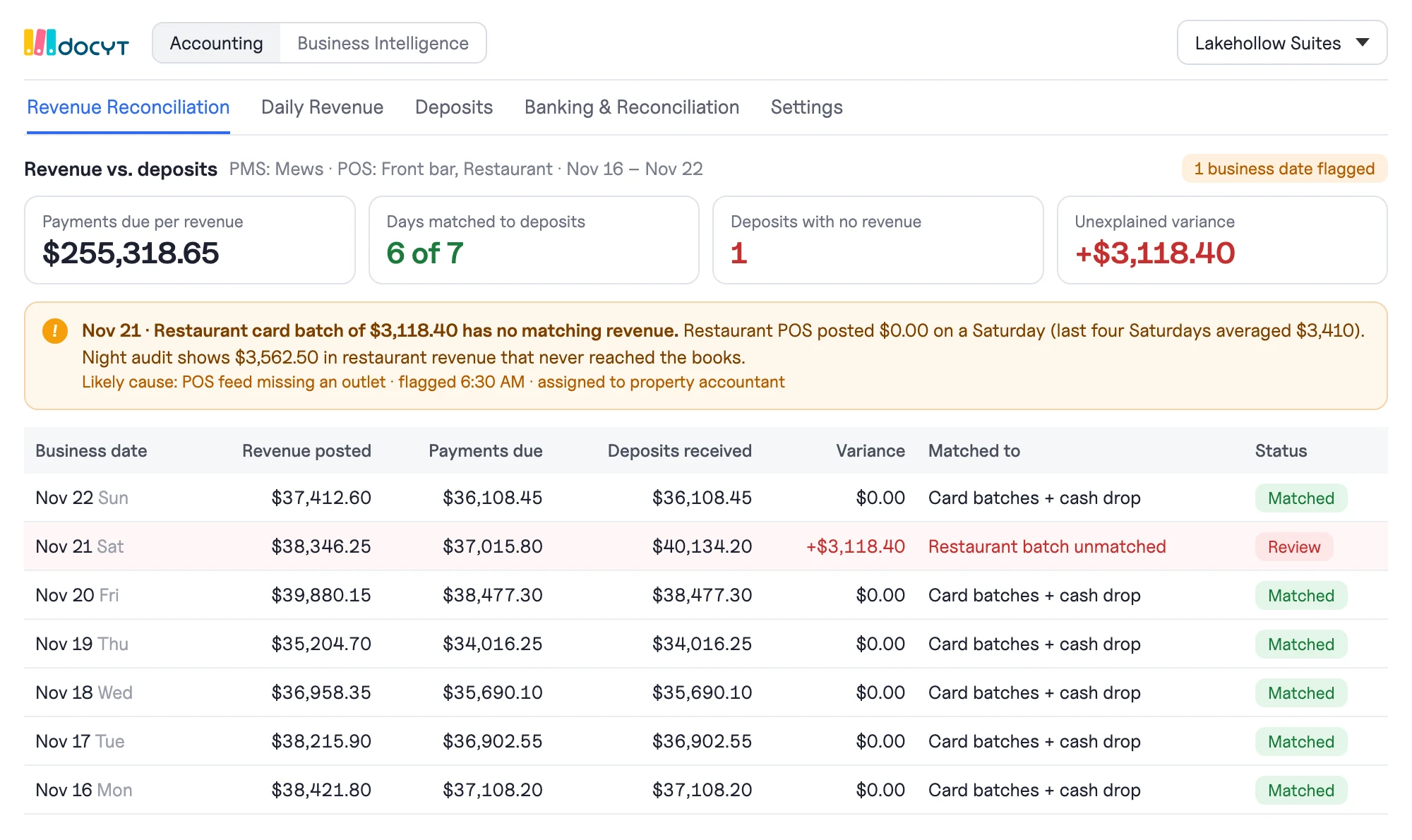
- Match revenue to deposits. Card settlements that never arrive, or deposits with no matching revenue, point to a feed problem. Our guide on why merchant batches rarely match the bank explains what normal timing looks like.
- Watch for zero and outlier days. A restaurant posting nothing on a Saturday is a feed issue until proven otherwise.
- Clear suspense daily. Unmapped revenue should be zero each morning.
Assign an owner and a response time for each check. Treat PMS upgrades, new outlets, and credential changes as triggers for an extra review that week.
How Finance Teams Automate This
Daily checks work, but they compete with everything else on a controller’s list. Our hospitality accounting platform connects to PMS and POS systems, merchant processors, and bank feeds. It posts night audit and POS revenue nightly, mapped to USALI, and matches daily revenue against deposits the same day. Because reconciliation runs every day, a missing or mismatched day surfaces in the morning review instead of at month-end.
Summary Overview
- The risk: PMS and POS feeds can stop, post partially, duplicate, or drift without any visible error.
- The cost: gaps found at month-end mean rebuilding revenue, re-reconciling deposits, and correcting owner reports.
- The fix: check completeness, tie to the night audit, match deposits, watch outliers, and clear suspense every day.
Talk With Docyt
Want every property’s revenue feed verified daily, not discovered broken at month-end? Schedule a consultation with Docyt to learn more.