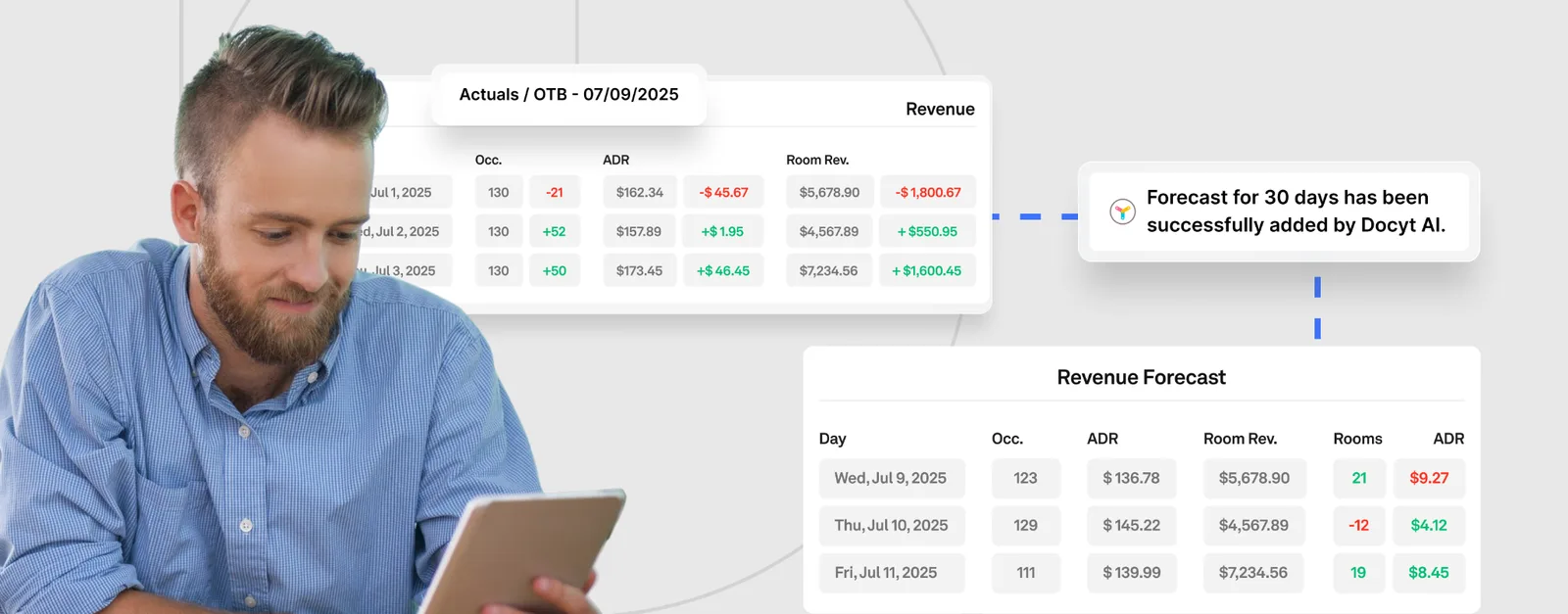
Revenue leakage rarely shows up as one obvious error. It shows up as a comp room nobody logged, a folio that closed a day late, a deposit that never quite matched the bank. Each one looks like noise. Across a portfolio of a dozen properties, run every month, that noise adds up to real money nobody can trace. This checklist is built to be run property by property, on a recurring cadence, so leakage gets caught while it is still a small number instead of a mystery line at month-end.
How to Use This Checklist
Run through all 10 points for each property at least monthly, and weekly for any property flagged in a prior review. Where a point below has more depth than fits here, we link out to the full breakdown so this stays a working checklist instead of another long read.
The 10-Point Checklist
- Match daily PMS revenue to bank deposits, property by property.Chargebacks, processor fees, and batch timing create gaps that should be caught daily, not discovered at month-end. Full breakdown in Merchant Deposit Reconciliation for Hotels.
- Verify OTA payouts against gross booking value.Confirm cancellations and refunds are not still carrying the original commission, since some OTAs charge commission on cancellations regardless of the final PMS-recorded revenue.
- Confirm every property’s night audit actually closed before it rolls into the portfolio total.A late or skipped close silently drops a full day of revenue from the consolidated view. See Prevent Revenue Leakage: Automate Night Audit and Reconciliation.
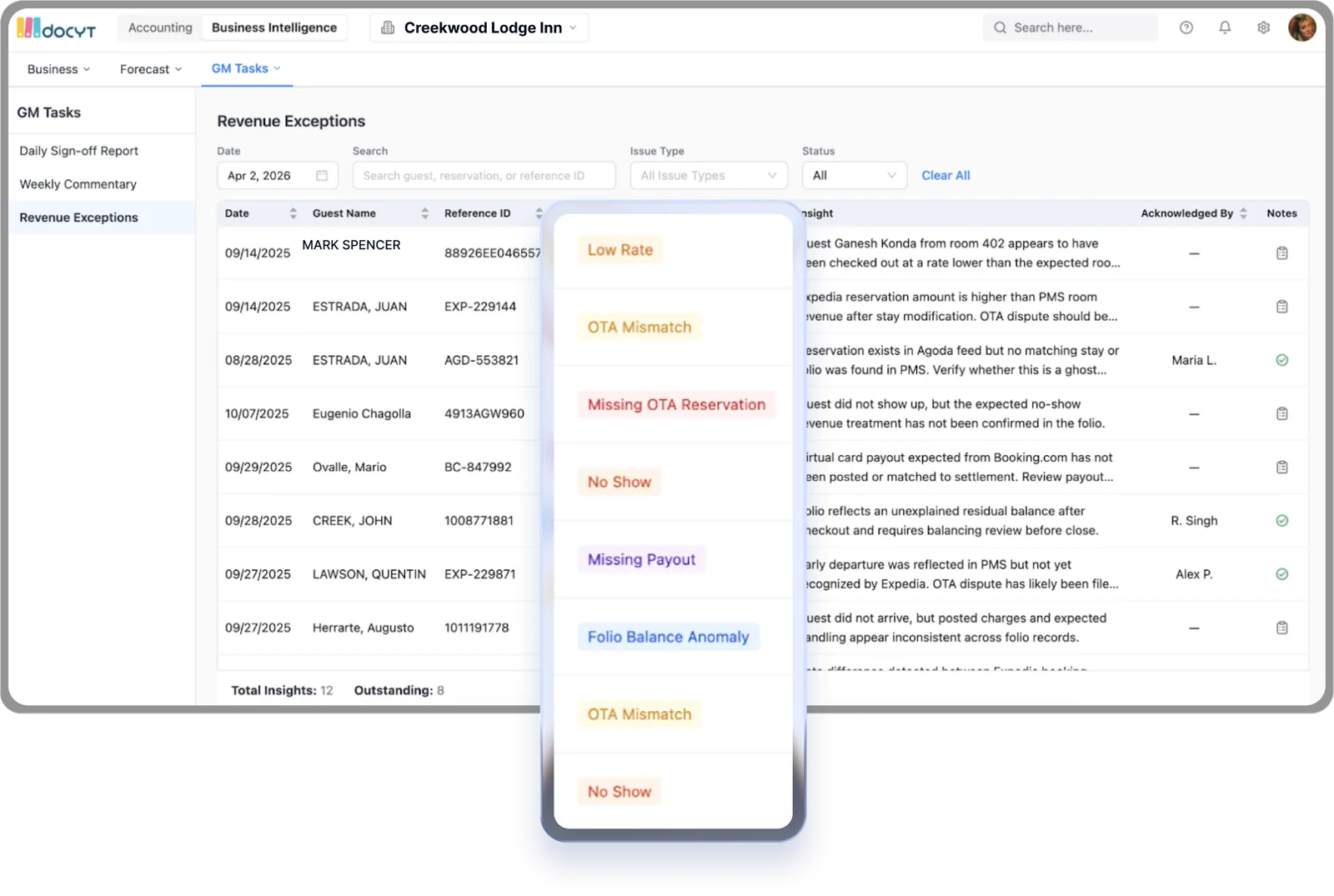
- Scan for folio exceptions.Rate-code mismatches, missing folio closes, out-of-policy adjustments, and orphaned charges all balance cleanly on their own and rarely trip a normal error check. Full detail in Hotel Folio Exceptions: The Revenue Leak Multi-Property Owners Rarely See.
- Check that every property maps revenue to the same chart of accounts.A property coding banquet or F&B revenue differently than the rest of the portfolio skews cross-property comparisons even though nothing at that property is technically wrong. See Standardizing a Chart of Accounts Across Hotel Brands and Property Types.
- Reconcile comp rooms and rate overrides against a logged approval.A comp or discount approved verbally, with no reason or approver recorded, is one of the quietest ways revenue disappears from a folio.
- Verify advance deposits and unearned revenue liability against actual guest folio balances.A liability account that drifts from the PMS means deposits are not converting to revenue when they should. See Advance Deposit Revenue Recognition for Hotels.
- Confirm tax coding is current and consistent with local rates at every property.Manual audits rarely check this systematically, so an outdated rate can quietly over- or under-collect for months.
- Trace no-show and cancellation revenue to confirm it was actually captured.If a reservation is not updated across the PMS and the OTA at the same time, no-show revenue is one of the first things to slip through.
- Review variance alert thresholds so real leakage does not get lost in noise.A large, unexplained discrepancy should be flagged immediately, while small, expected differences should not consume review time every day.
Turning a Checklist Into a Habit
A checklist only works if someone actually runs it, on every property, every month. That is the part that breaks down first as a portfolio grows, since the tenth property does not get the same attention as the first. Docyt connects directly to PMS, POS, and processor data across a portfolio and checks most of these 10 points automatically, every day, so a controller reviews flagged exceptions instead of hunting for them. See how this works on our hospitality accounting automation page.
Staffing pressure makes manual audits like this harder to sustain consistently. The American Hotel & Lodging Association’s 2025 State of the Industry report names staffing as one of the most persistent challenges hotels continue to navigate, which is part of why manual, front-desk-level checks are so inconsistent from property to property. Frameworks like USALI, maintained by the Hospitality Financial and Technology Professionals association, give portfolios a consistent standard to audit against, but only if someone is actually checking the numbers against it.
Quick Recap:
- Revenue leakage is rarely one big error. It is many small, individually explainable gaps that compound across a portfolio.
- This 10-point checklist covers deposit matching, OTA payouts, night audit closure, folio exceptions, chart of accounts consistency, comps, deposit liability, tax coding, no-shows, and variance thresholds.
- Run it property by property, monthly at minimum, and weekly for any property already flagged.
Automating the checks that can be automated frees a controller to focus on the exceptions that actually need judgment.
Ready to see how many of these 10 points Docyt already catches automatically?
Schedule time with Docyt to walk through your portfolio and find out where the gaps are.