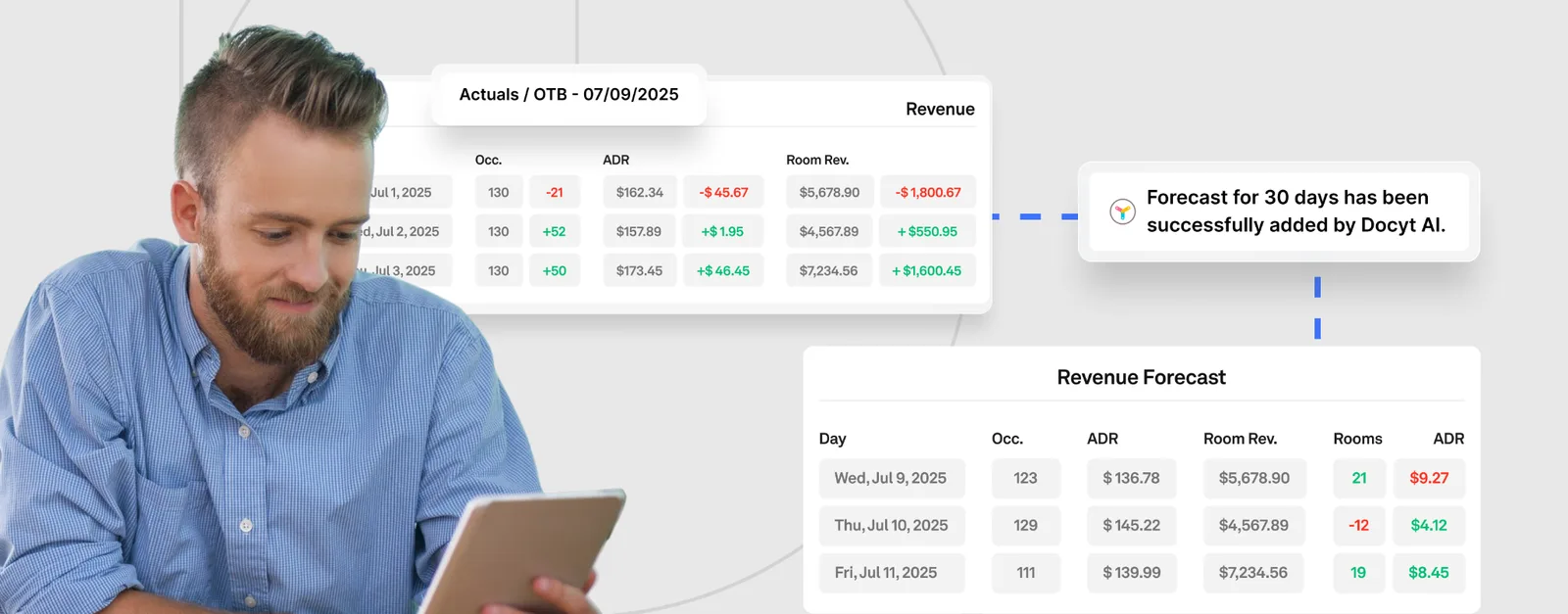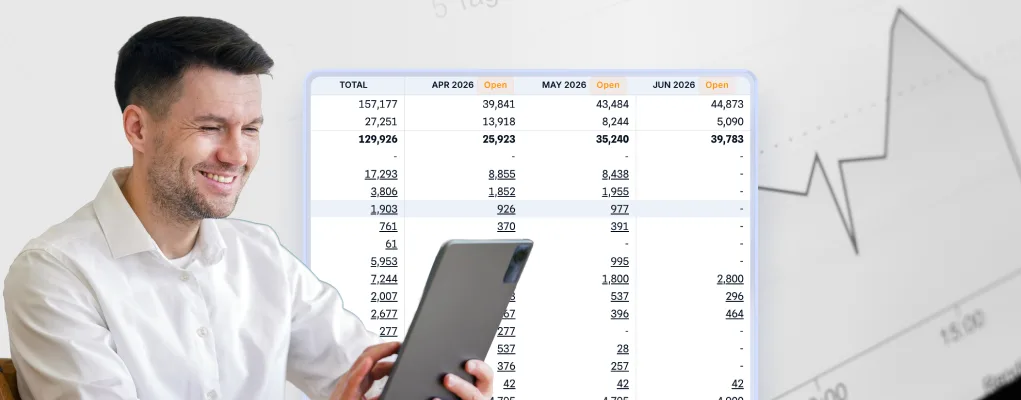

It is 7 a.m. Across a twelve-hotel portfolio, night audit closed cleanly at eleven properties. At the twelfth, the General Manager (GM) forgot to close it. By the time a regional controller pulls up the consolidated flash report, one property’s revenue is missing, and nobody notices until someone hunts property by property. That gap is not a mystery. It happens at a handful of predictable points, and scale makes each one more likely.
What the Night Audit Is Supposed to Hand Off
Night audit closes each hotel’s business day: it locks room revenue, applies taxes, batches credit card transactions, and reconciles the day’s folios. The output is a revenue journal and departmental totals ready for deposit, the source document for the GL entry, matched against what lands in the bank.
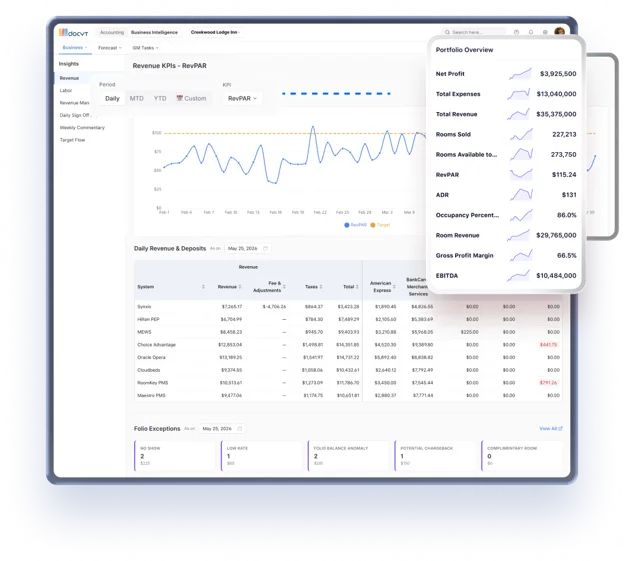
For one property, that is the whole story. For a portfolio, it is only step one. Every hotel runs its own night audit, often on a different PMS and schedule, so a property-level close is not a portfolio-level close. If one property’s audit runs late, its revenue goes missing from the consolidated view that day, even though nothing else is wrong. The journal that feeds the GL is really many journals, one per property, that still need to roll up into one consistent total.
How Daily Revenue Should Flow
The ideal path is simple, then repeated at every property. Each PMS produces the day’s revenue by department. Each processor settles its card batch into the bank, usually one to three days later. The GL entry ties those together, property by property: the PMS total, the processor deposit, the bank statement line. Multiply that across a portfolio, and the consolidated GL entry is a roll-up of many of these matches happening at once. When they all agree, the day is done. When they do not, that is where finance teams lose their month.
The 6 Places It Breaks
- PMS totals don’t match the merchant deposit.Chargebacks, processor fees, and batch timing mean the number a PMS reports rarely matches what lands in the bank. Across dozens of properties, this small daily gap multiplies fast.
- Multiple revenue streams get lumped into one GL line.A full-service property runs rooms, F&B, banquet, and spa through different POS systems. Posting one lump figure at any property erases departmental accuracy and hides which department is driving performance.
- OTA payouts post net instead of gross, and refunds compound it. Online travel agencies (OTAs) like Booking.com and Expedia settle after deducting commission, so the deposit is smaller than the PMS-recorded revenue. It gets messier when a guest cancels or gets refunded after the OTA has already assessed commission on the original booking, since some OTAs still charge commission on cancellations. Left unchecked across a multi-property OTA mix, this understates revenue and overstates what the hotel actually owes.
- Manual re-keying between night audit and the GL.Properties still export night audit reports and re-enter totals by hand. Every manual entry risks an error, and that risk compounds across a portfolio where each hotel may run a different PMS.
- Timing differences at month-end cutoff.A folio that closes near midnight on the 30th but settles on the 1st creates a mismatch between the PMS date and the bank date. Across properties in different time zones, this drifts revenue between months.
- Inconsistent consolidation across the portfolio.Even when every property closes cleanly, rolling up many property-level journals only works if each hotel maps revenue to the same chart of accounts. One property coding banquet revenue differently throws off cross-property comparisons.
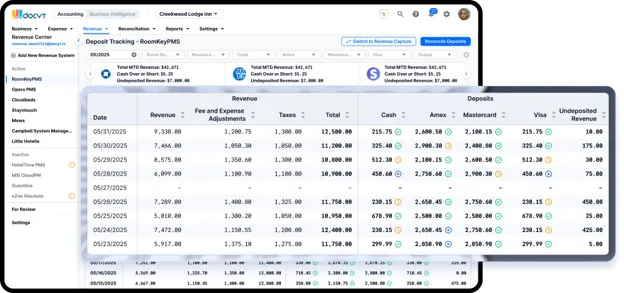
Docyt Accounting Platform: Revenue Module - Deposit Tracking
Closing the Gap Between Night Audit and the Books
Each breakpoint has the same root cause: revenue posting depends on someone manually connecting systems, at every property, that were never built to talk to each other. Docyt connects directly to PMS, POS, and processor data across a portfolio, so the moment each hotel’s night audit closes, revenue is extracted and matched against deposits from multiple systems automatically, on one consistent chart of accounts. That keeps departmental P&Ls accurate hotel by hotel and reconciliation done daily, portfolio-wide, instead of 10 to 15 days after month-end. See how this works on our hospitality accounting automation page.
Rising operating costs make this accuracy matter more for owners running several properties. The American Hotel & Lodging Association’s 2025 State of the Industry report found property-level costs rose faster than revenue in 2024, with operations, sales and marketing, and IT expenses each climbing nearly 5 percent. Reporting frameworks like USALI, maintained by the Hospitality Financial and Technology Professionals association, keep departmental reporting consistent across a portfolio, but only if daily postings are accurate at every property.
Summary Recap:
- Night audit should produce a revenue journal tying to PMS totals, processor deposits, and the bank statement at every property.
- The 6 breakpoints: PMS-to-deposit mismatches, lumped revenue streams, net versus gross OTA payouts, manual re-keying, month-end cutoff timing, and inconsistent portfolio consolidation.
- Automating the match across every property closes these gaps daily instead of at month-end.
- Accurate daily posting on one chart of accounts protects margins across the portfolio as costs rise.
Ready to see how daily revenue reconciliation should actually work?
Schedule time with Docyt to walk through your properties’ current process and find out where the gaps are.