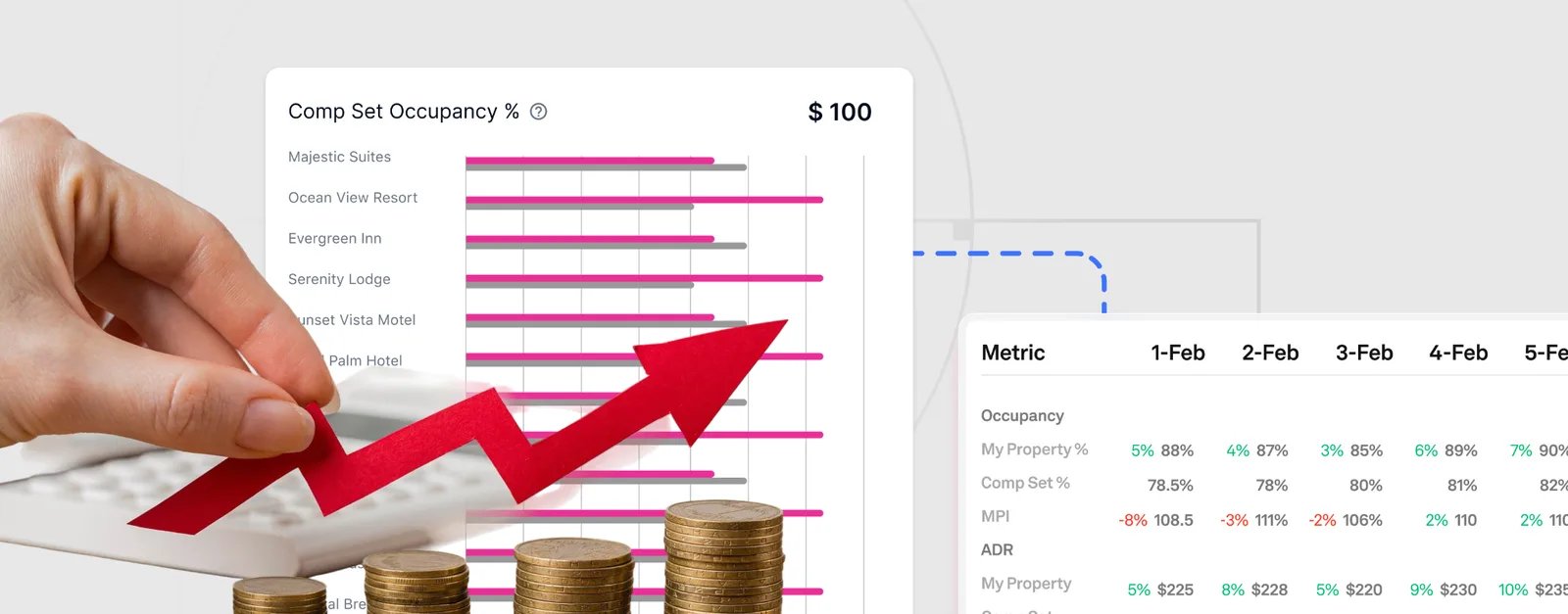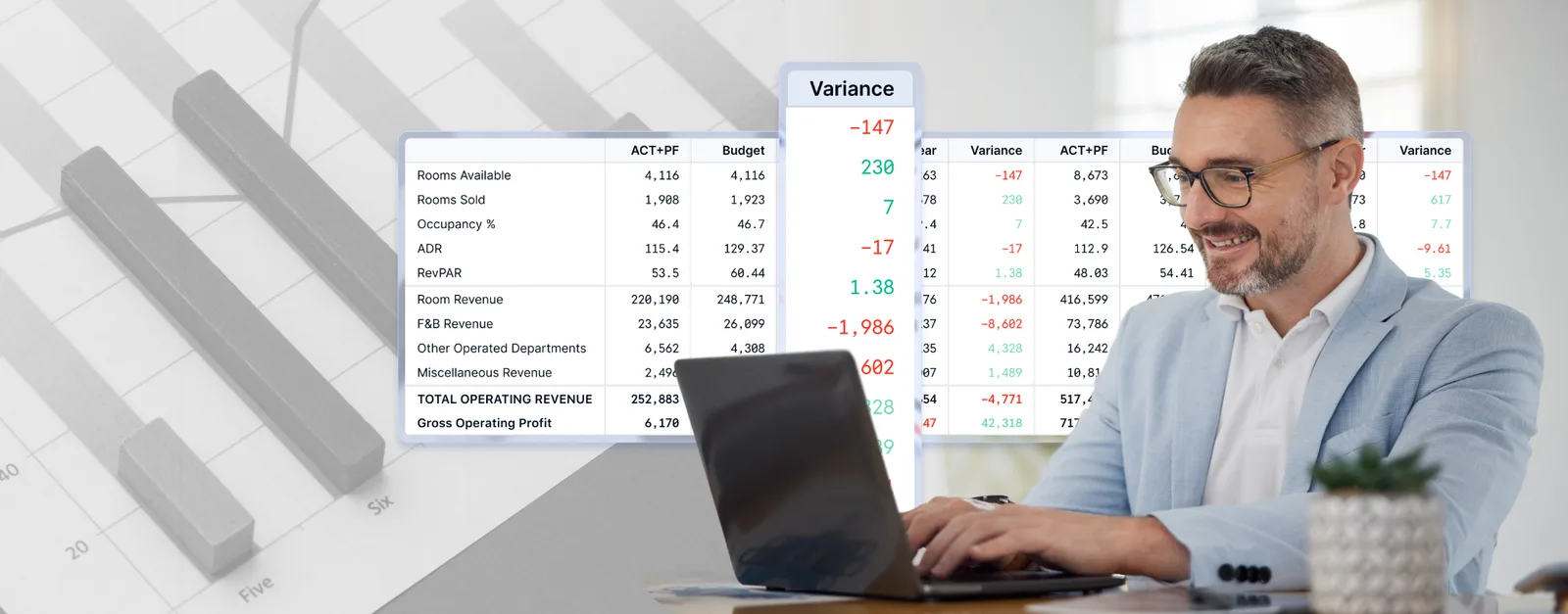
It is Thursday afternoon, and your revenue meeting has one item on the agenda: next weekend is going to compress. The team agrees to raise rates for Friday and Saturday across the board. The weekend sells out, ADR looks strong, and everyone moves on.
Then the month-end P&L lands, and rooms profit did not move nearly as much as the ADR report suggested it would. The reason is not the rate. It is where the bookings came from. Much of that weekend sold through the channels with the highest cost to acquire, while lower-cost channels never had a chance to fill those rooms.
Date-based pricing tells you when demand will show up. A hotel segmentation report tells you where it comes from and what each booking is worth after it costs you something to get. Repricing by channel is how you act on that second answer.
Why pricing by date alone leaves money on the table
Most hotel pricing strategies start with the calendar: high-demand dates get higher rates, soft dates get promotions. That logic is sound, but it treats every booking at the same rate as equally valuable. It is not.
A room sold at the same gross rate can net very different revenue depending on the channel it came through. Direct bookings on your website, voice reservations, GDS bookings, online travel agencies (OTAs), wholesale contracts, and group blocks all carry different commissions, transaction fees, and loyalty or marketing costs.
Here is a simple illustration. These numbers are hypothetical, not a benchmark:
- A $220 room booked direct, with an assumed 3% payment processing cost, nets about $213.40.
- The same $220 room booked through a third-party channel, with an assumed 18% commission plus the same 3% payment cost, nets about $173.80.
That is a $39.60 difference on a single room night at the same advertised rate. Multiply it across a compressed weekend, and the gap between “we hit our ADR” and “we grew rooms profit” becomes clear.
What a hotel segmentation report should show you
A useful segmentation report goes beyond a revenue split by rate code. To make channel pricing decisions, you need to see each segment and channel side by side on the same terms:
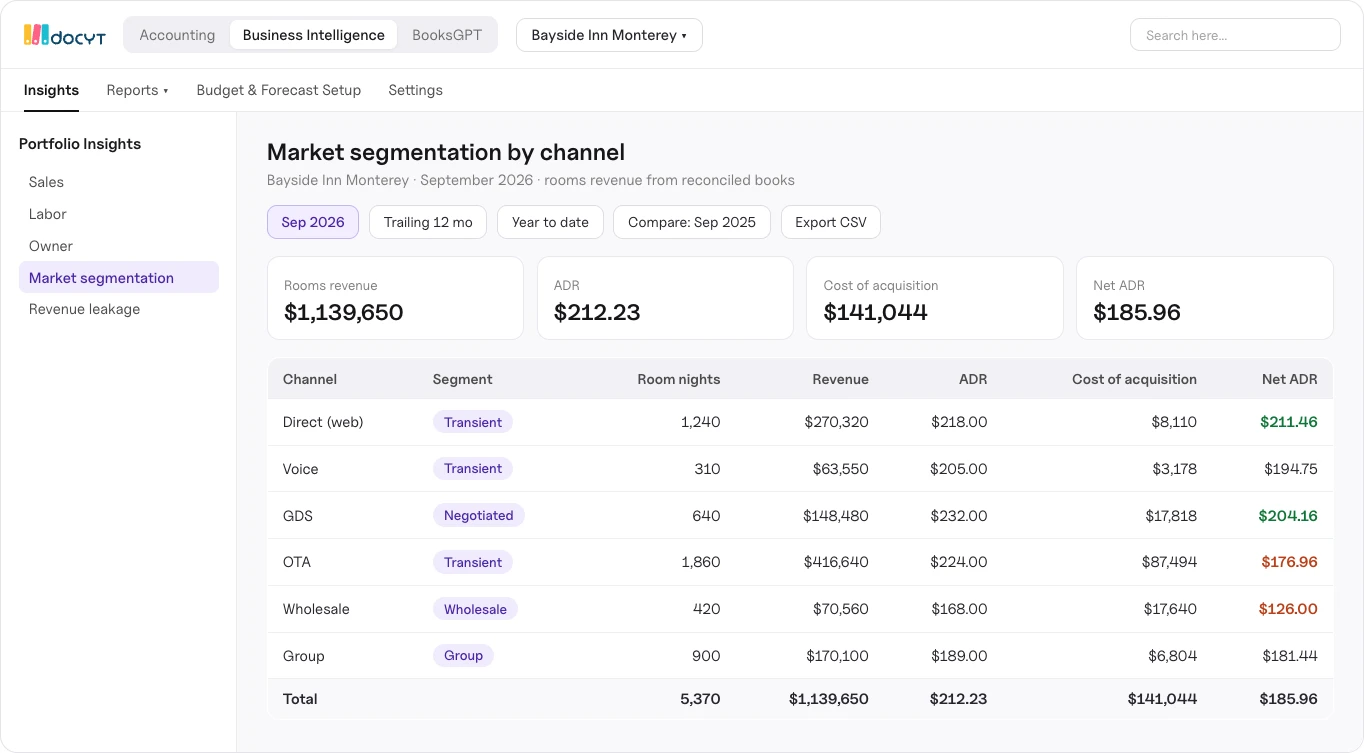
- Room nights, revenue, and ADR by market segment (transient, group, contract, wholesale) and by channel (direct, voice, GDS, OTA)
- Cost of acquisition for each channel, including commissions, fees, and loyalty costs
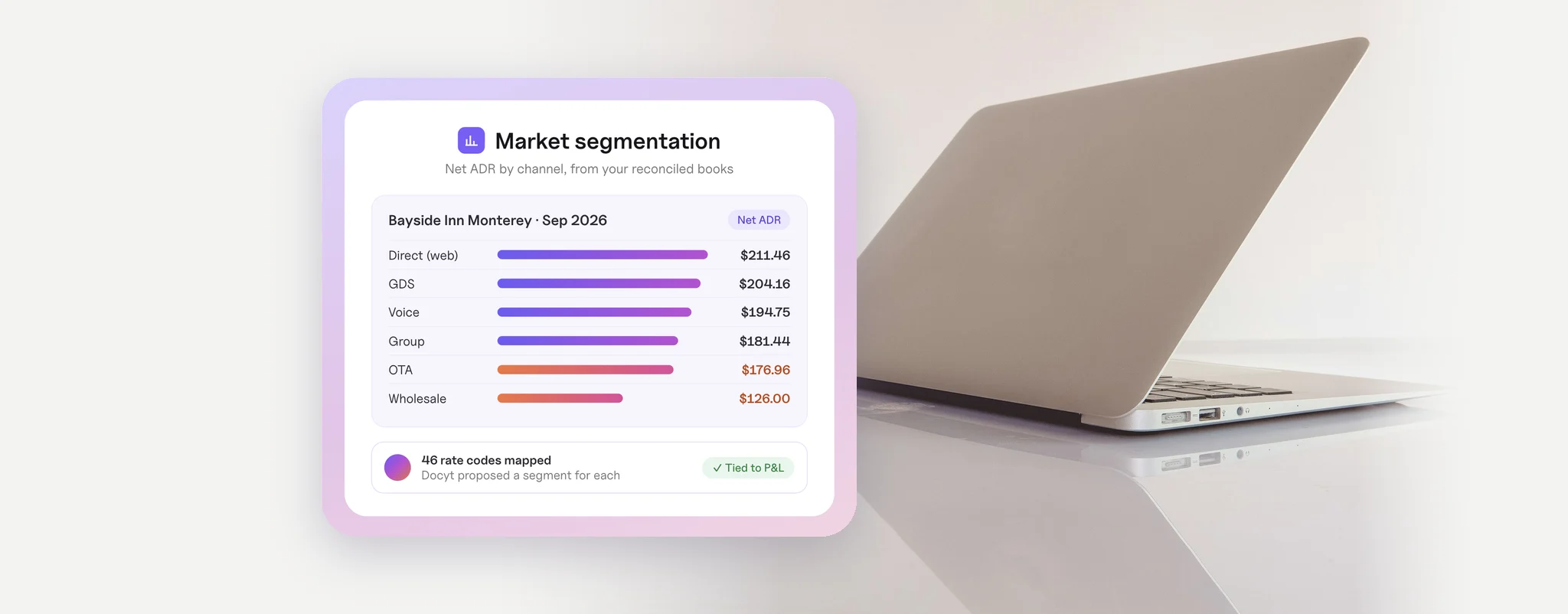
- Net ADR and contribution after those costs, not just gross revenue
- Pace and pickup by segment for future dates, so you can act before the date arrives
- Comparisons to budget, forecast, and the same period last year
This level of detail is getting more attention across the industry. The 12th Revised Edition of the Uniform System of Accounts for the Lodging Industry (USALI) takes effect January 1, 2026, and HFTP notes that loyalty programs are bringing in a growing share of guests while the costs owners pay to support those programs have risen. When acquisition costs climb, gross ADR becomes a less reliable measure of how well a channel is performing.
How to reprice by channel: a practical playbook
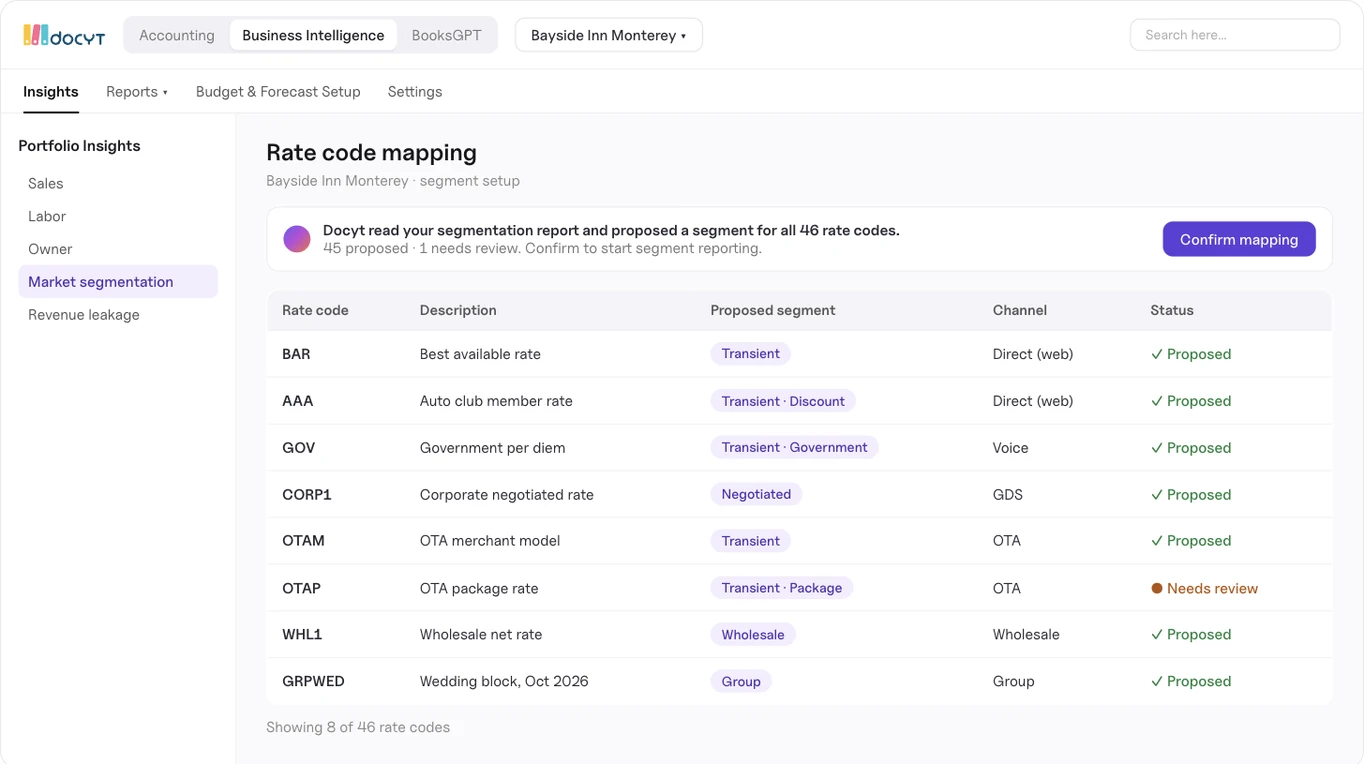
- Map every rate code to a segment and a channel. Rate codes multiply over time. If new codes are added without being mapped, your segmentation report quietly drifts out of date.
- Calculate net ADR by channel. Subtract commissions, transaction fees, and loyalty or marketing costs from gross revenue for each channel.
- Look for displacement on high-demand dates. Identify where a higher-cost channel filled rooms that a lower-cost channel or a higher-value segment would likely have taken.
- Adjust availability by channel, not just rate by date. On compression dates, consider limiting discounted or higher-cost inventory, applying length-of-stay restrictions, or promoting direct offers, always within your brand standards and distribution agreements.
- Review results weekly against actuals. Forecasts show intent. Reconciled actuals show what each channel really delivered.
One more consideration as you adjust rates by channel: price display rules. The FTC’s Rule on Unfair or Deceptive Fees, which took effect May 12, 2025, requires short-term lodging businesses that advertise prices to show the total price, including mandatory fees, upfront. Channel strategy should change availability and restrictions, not how clearly the total price is presented.
Why segmentation reports often fall short
Most hotel teams agree channel profitability matters. The challenge is getting a segmentation report they can trust. A few common reasons it breaks down:
- Rate code mapping lives in a spreadsheet that was built once and rarely updated.
- Revenue comes from PMS exports that do not tie back to the general ledger.
- Commissions and fees sit in accounts payable or channel statements, separate from the revenue they relate to.
- Reports for each property are built differently, so portfolio comparisons are unreliable.
When revenue and acquisition costs live in different places, net ADR by channel becomes a quarterly project instead of a weekly decision.
How we approach hotel segmentation reporting at Docyt
We built segmentation reporting on the same reconciled books our customers close every month, so the numbers in the report match the numbers in the financials.
- Rate codes that map themselves. Docyt reads a property’s segmentation report and proposes a market segment for every rate code, so setting up segment reporting takes minutes instead of a manual mapping exercise.
- Revenue and cost of acquisition together. Our market segmentation reporting in the Docyt Business Intelligence Suite covers transient, group, contract, OTA, and direct business by rate code and channel, with revenue, cost of acquisition, and contribution for each segment.
- Commissions tied to the bookings they belong to. Our OTA reconciliation matches each booking to its payout, including commissions, as part of Docyt’s hotel accounting platform, so channel costs reflect what was actually paid.
- Every property, one view. Segment and channel performance roll up across your portfolio, so you can compare properties on the same terms.
Frequently asked questions
What is a hotel segmentation report?
A hotel segmentation report breaks rooms revenue, room nights, and ADR into market segments and booking channels, so you can see which types of business and which sources drive performance.
What is the difference between a market segment and a channel?
A market segment describes who the guest is and how they booked, such as transient, group, or contract. A channel describes the source the booking came through, such as direct, voice, GDS, or an OTA. Pricing decisions are strongest when you can see both together.
Why use net ADR instead of ADR to compare channels?
ADR shows the rate the guest paid. Net ADR subtracts what it cost to acquire that booking. Two channels with the same ADR can deliver very different profit once commissions and fees are counted.
Summary overview
- Pricing by date tells you when demand arrives. A hotel segmentation report tells you where it comes from and what it is worth.
- The same gross rate can net very different revenue by channel once commissions, fees, and loyalty costs are included.
- Repricing by channel means mapping rate codes, calculating net ADR, spotting displacement, and adjusting availability by channel.
- Segmentation reports break when rate code mapping, revenue, and acquisition costs live in separate places.
- Docyt maps rate codes to segments and reports revenue, cost of acquisition, and contribution by segment and channel from reconciled books.
See your channel mix clearly
If your pricing decisions still start and end with the calendar, your segmentation data can tell you a lot more. Schedule time with our team to see how Docyt shows revenue, cost of acquisition, and contribution by segment and channel across your properties.