It is Friday afternoon, and a General Manager is finishing the weekly owner update. The revenue numbers are already in the report, so the commentary box is the last thing standing between the GM and the weekend. The GM types something close to: “Revenue was down slightly due to market conditions. Labor was in line. We expect to recover next month.” It gets sent. It gets skimmed. And somewhere in a portfolio of ten or twelve hotels, an owner or asset manager reads that same sentence, in one form or another, from three or four different properties that week.
That is the quiet failure point in a lot of hotel reporting programs. The numbers are accurate. The commentary is not useless, exactly, but it is not doing the job it was built to do. Owners stop reading it because it never tells them anything they could not have guessed on their own. And once an owner stops trusting the qualitative layer of a report, they start double-checking everything else in it too.
Building weekly commentary owners actually read starts earlier than Friday afternoon. It starts with the daily sign-off habit that feeds it, and the discipline used to turn a variance into a real explanation.
The Daily Sign-Off Is Where Trustworthy Commentary Starts
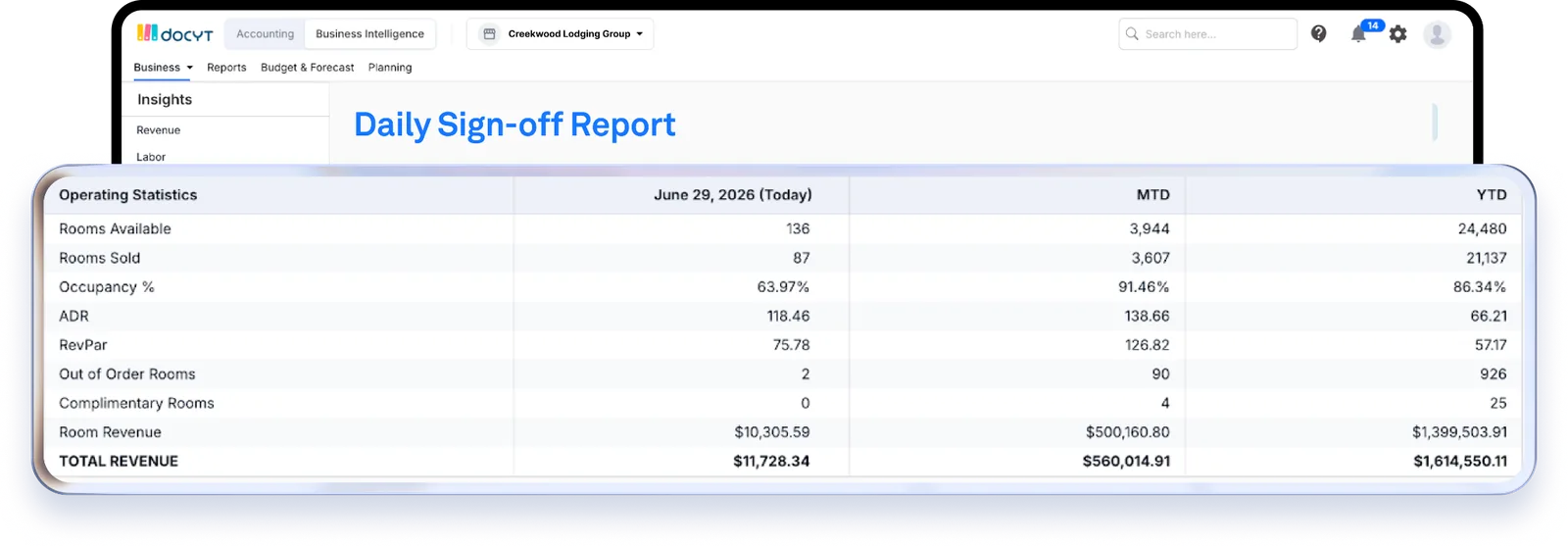
A GM Daily Sign-off is a short, structured checkpoint: the GM reviews the prior day’s flash numbers, confirms they match what actually happened on property, and either signs off or flags a discrepancy for the accounting team to chase down. It takes a few minutes. It is not, on its own, the weekly commentary an owner reads. But it is the reason that commentary can be trusted at all.
Commentary written on top of numbers a GM has never actually reviewed reads like commentary written on top of numbers a GM has never actually reviewed. Owners can tell. A GM who signs off on the daily flash every day knows, by Friday, exactly which line moved and why, because they caught it on Tuesday, not because they are reverse-engineering an explanation from a spreadsheet they opened for the first time that afternoon.
Why Most Weekly Commentary Gets Skimmed, Not Read
A few patterns show up again and again in weekly commentary that owners stop reading:
- It restates the number instead of explaining it (“F&B revenue was down 8 percent” is not commentary, it is the report repeating itself).
- It reaches for the same explanation every time market conditions, seasonality, one-off event without saying what specifically happened.
- It is inconsistent across a portfolio. One GM writes three thoughtful sentences. Another writes one word. Ownership cannot compare properties on commentary that is not written to the same standard.
- It arrives without a next step, so even a well-written explanation leaves the owner wondering what, if anything, is being done about it.
None of this is a writing problem so much as a structure problem. GMs are busy operators, not copywriters, and a blank commentary box with no format is going to get filled with whatever comes to mind fastest.
A Three-Part Structure Owners Actually Trust
A useful discipline for hotel variance commentary breaks each explanation into three parts: what changed, why it changed, and what happens next. What changed is the fact, stated plainly. Why it changed is the actual root cause, not a symptom or a general excuse. What happens next is the decision or action being taken, even if that decision is simply to monitor the trend for another week.
This kind of discipline is echoed in industry commentary on owner-operator reporting. A 2026 piece in Hotel Online on hotel financial reporting makes a similar point: owners lose trust in reporting less because of the numbers and more because of vague or defensive explanations, and they respond best when management owns the variance directly instead of hiding behind broad excuses.
Applied to a real hotel scenario, the difference looks like this. Instead of “Labor was over budget due to staffing challenges,” a GM using this structure would write something closer to: housekeeping labor ran 6 percent over budget this week (what changed), driven by two call-outs on a weekend with occupancy above forecast (why it changed), and the department is cross-training a part-time associate to cover weekend gaps going forward (what happens next). That is a sentence an owner can actually act on, or at least trust.
Feeding Commentary With Numbers That Are Actually Current
A three-part structure only works if the GM has current numbers to work from in the first place. If the books are still catching up from three weeks ago, a GM cannot honestly say what changed this week, because this week is not booked yet.
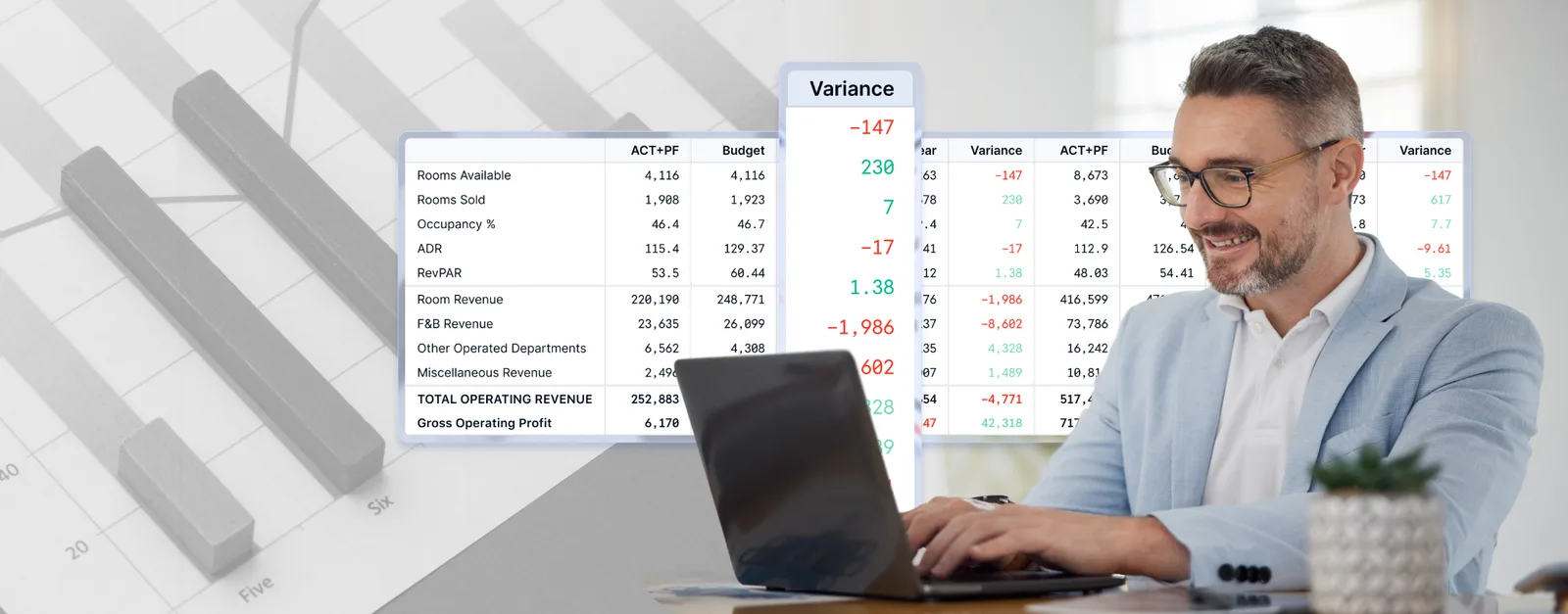
This is the same continuous accounting foundation described in Docyt’s look at what a real-time hotel financial dashboard requires, where the Daily Revenue Flash and Daily Labor Flash are built from transactions that are categorized and reconciled the same day, rather than assembled at month-end. That is what makes a daily sign-off meaningful in the first place. There is a real, current number to sign off on, not a placeholder waiting for the accounting team to finish reconciling last month.
We have written before about how this daily discipline connects to a broader weekly rhythm in GM Weekly Workflows: Real-Time Profit Accountability for Hotels, which looks at how budget-vs-actual visibility changes what a GM can do mid-month, before a miss is already locked in.
Keeping Commentary Consistent Across a Portfolio
Structure solves the quality problem for one GM. Consistency across ten, twenty, or fifty properties is a different challenge, and it is the one most portfolios never fully solve. Some GMs will naturally write sharp, specific commentary every week. Others will not, whether because of time pressure, writing comfort, or simply not knowing what an owner is actually looking for.
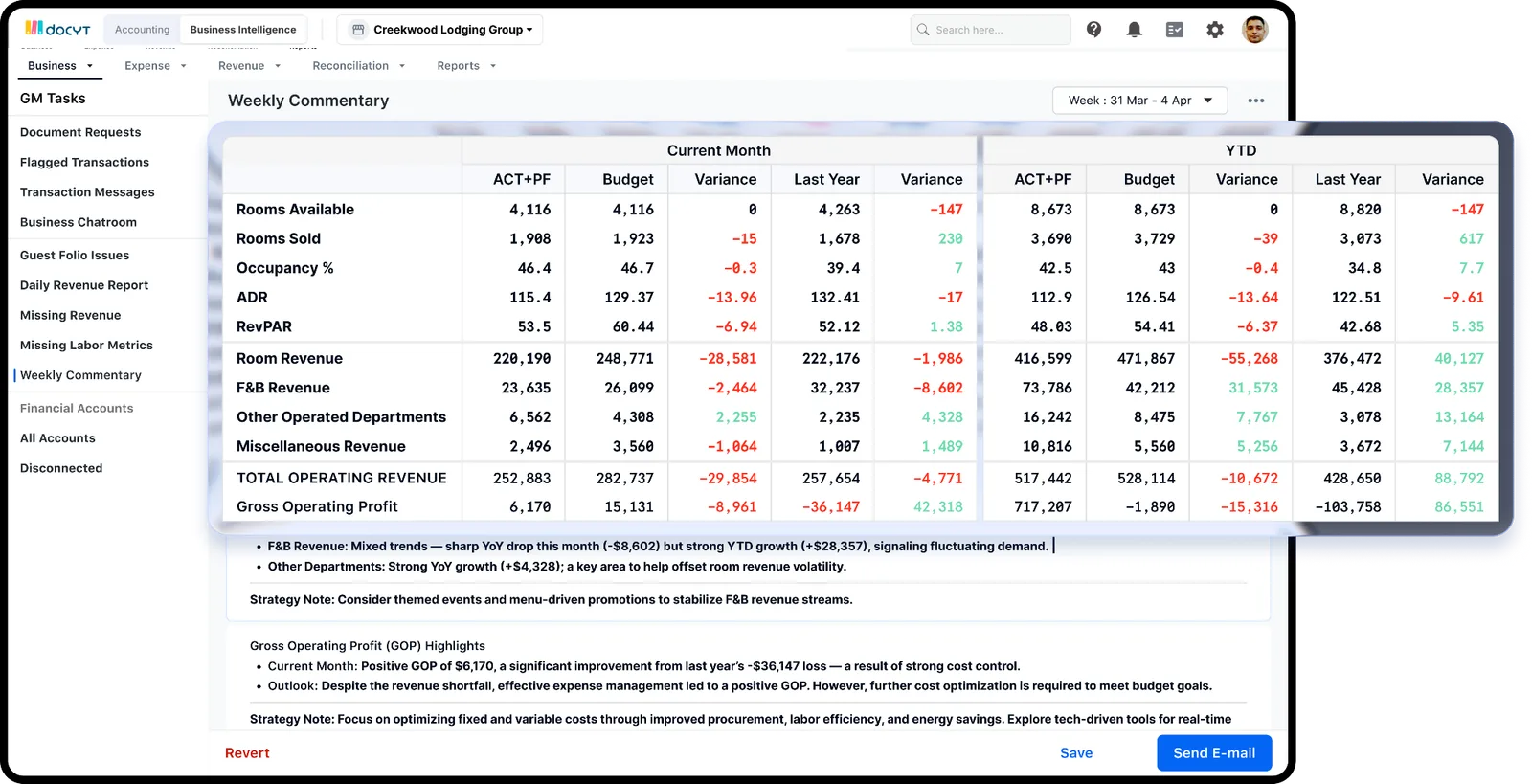
Docyt’s AI-assisted commentary addresses this by analyzing the week’s variance and drafting a summary the GM can review, adjust, and finalize, rather than starting from a blank box every Friday. The GM still owns the explanation and the sign-off. What changes is that every property starts from a consistent baseline of structure and specificity, so ownership can trust the commentary layer as much as the numbers underneath it, regardless of which GM wrote it.
This matters because owners and operators are, by nature, looking at the same hotel through different lenses. A recent piece on aligning owner and operator perspectives in hospitality asset management points out that owners tend to focus on long-term value and return, while operators are focused on the day-to-day running of the property. Consistent, structured commentary is one of the few tools that closes that gap every single week instead of once a quarter.
Turning Commentary Into a Habit Owners Look Forward To
The goal is not longer reports or more reporting. It is commentary that an owner opens because they expect to learn something specific from it, not because they are obligated to skim past it on the way to the numbers. That only happens when the daily sign-off is real, the weekly structure is consistent, and the underlying books are current enough to support both.
Get that right, and the weekly update stops being a Friday afternoon chore. It becomes the place where an owner actually finds out what is happening in their hotel, and where a GM gets credit for catching problems early instead of explaining them after the fact.
Summary Overview:
- The GM Daily Sign-off is the accountability step that makes weekly commentary trustworthy: a GM reviews and confirms the prior day’s numbers before explaining a weekly trend.
- Most weekly commentary gets skimmed because it restates numbers, repeats generic explanations, or arrives with no next step.
- A three-part structure, what changed, why it changed, and what happens next, turns a variance line into something an owner can act on.
- Commentary is only as current as the accounting behind it, which is why continuous, daily bookkeeping matters as much as the writing itself.
- AI-assisted drafting can keep commentary quality consistent across a portfolio, so every property reports to the same standard regardless of who is writing it.
See It in Your Portfolio
If your GMs are writing weekly commentary that owners are not reading, the fix usually starts upstream, with daily numbers your team can trust and a structure that makes the writing easier, not harder.
Schedule time with Docyt to see how GM Daily Sign-off and Weekly Commentary work together inside Docyt’s real-time accounting and business intelligence platform.