Cash-basis accounting feels manageable when transaction volume stays modest. As activity increases across cards, vendors, and bank accounts, manual entry quietly becomes a burden that slows everything else.
An agency owner scrolling through hundreds of ad transactions, a clinic administrator reconciling deposits against POS exports, or a contractor entering supplier invoices late at night – everyone experiences the same burden.
Manual data entry slows everything down. And the slowdown affects decisions.
When a system depends on someone entering transactions before the numbers make sense, the issue goes beyond extra work.
Reports stay unfinished until reconciliation is complete. Profit isn’t fully visible, and growth choices get made using numbers that are still being processed. Basic automation does help a little. Bank feeds pull transactions, and rules assign categories to them.
But someone still has to check the work, fix mistakes, and move things forward manually.
A complete elimination of manual entry requires removing dependencies at each step rather than simply increasing typing speed. Here’s how Docyt makes this possible:
Automated invoice and bill extraction:
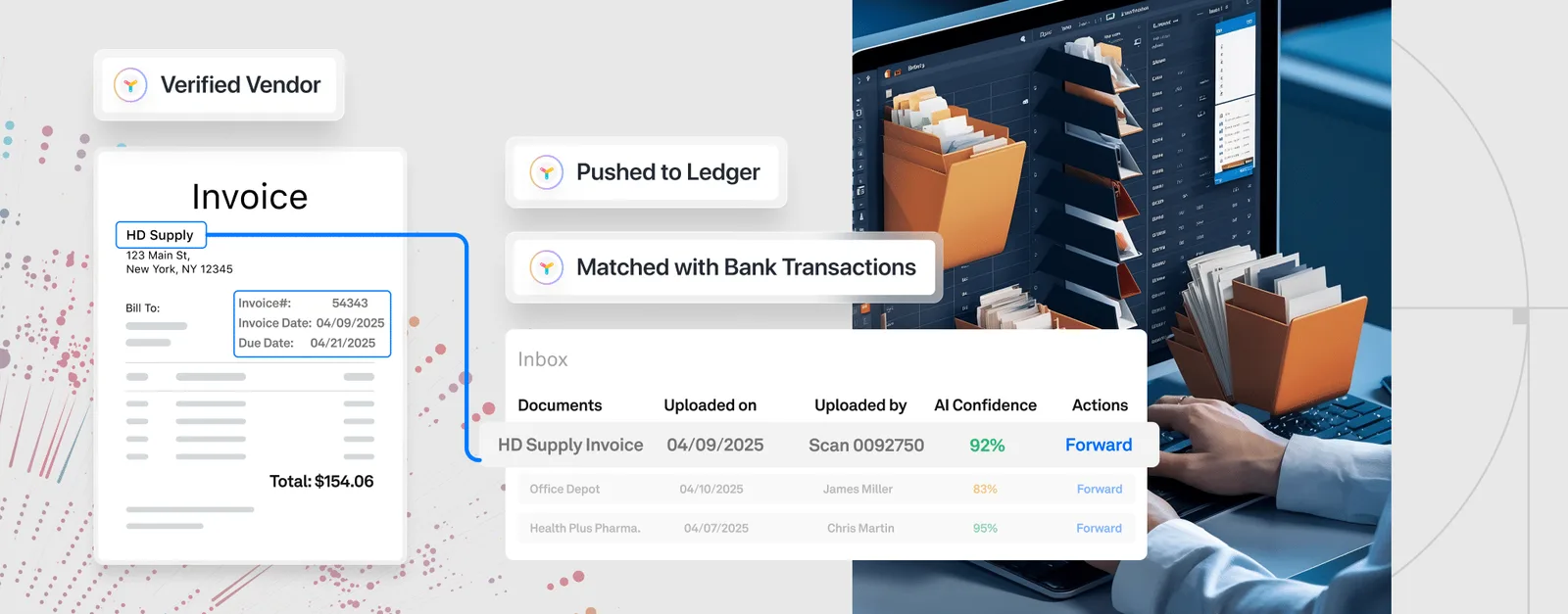
When a vendor invoice arrives via email or upload, Docyt captures supplier details, tax components, line items, and totals, and accurately posts them to the accounting system. So, a contractor who receives weekly material invoices no longer has to retype repetitive supplier information. Or a clinic that deals with recurring medical supplies can see the bills recorded immediately upon arrival.AI-driven expense categorization that adapts over time
Instead of relying on static rulesthat assign categories based solely on vendor names, Docyt recognizes patterns across transactions, accounts, and periods.For an agency that processes hundreds of advertising charges, recurring spend is consistently categorized without repetitive corrections. A professional services firm with ongoing SaaS subscriptions can automate its expense mapping with perfect contextual accuracy.What makes Docyt stand out is its ability to interpret behavior and its exceptional accuracy. Powered by HpAI, Docyt is trained on 128 billion real-world accounting data points across full-cycle bookkeeping, which enables industry-leading accuracy and context-aware categorization even in complex transaction environments.
To learn more about how Docyt’s purpose-built AI delivers industry-best accounting automation, explore Docyt High Precision Accounting Intelligence (HpAI).
Real-time receipt capture, transaction linking & continuous reconciliation:
Docyt attaches documentation to transactions at the point of entry to preserve the audit readiness. Records are organized automatically, and documentation aligns with ledger entries from the start. But documentation alone is only part of the equation. The real strength lies in continuous bank and credit card reconciliation.Behind the scenes, Docyt’s AI agents simulate the decision logic of experienced bookkeepers and automatically match transactions, link records, and resolve inconsistencies without manual intervention. This live reconciliation eliminates backlogs that typically occur during closing cycles and burden accounting teams.
From real-time capture and transaction linking to continuous reconciliation & reporting, everything flows as a single, connected process in Docyt.
Multi-account and multi-entity coordination within a unified system
Growing cash-basis firmsoften operate across several bank accounts, credit cards, or legal entities.And more surface area usually means more room for error.
Transfer confusions, missing entries, classification mistakes, consolidation errors, or reconciliation gaps are the common issues that businesses face.
Docyt eliminates them altogether by unifying every account, transaction, and entity inside one coordinated AI-driven system, which processes, matches, and validates data continuously.
It consolidates financial activity across these structures, handles internal transfers, and ensures accurate reporting across the system. In effect, the leadership sees a complete financial picture without manually stitching together spreadsheets from separate sources.
Continuous close with live financial reporting – Move straight to insight:
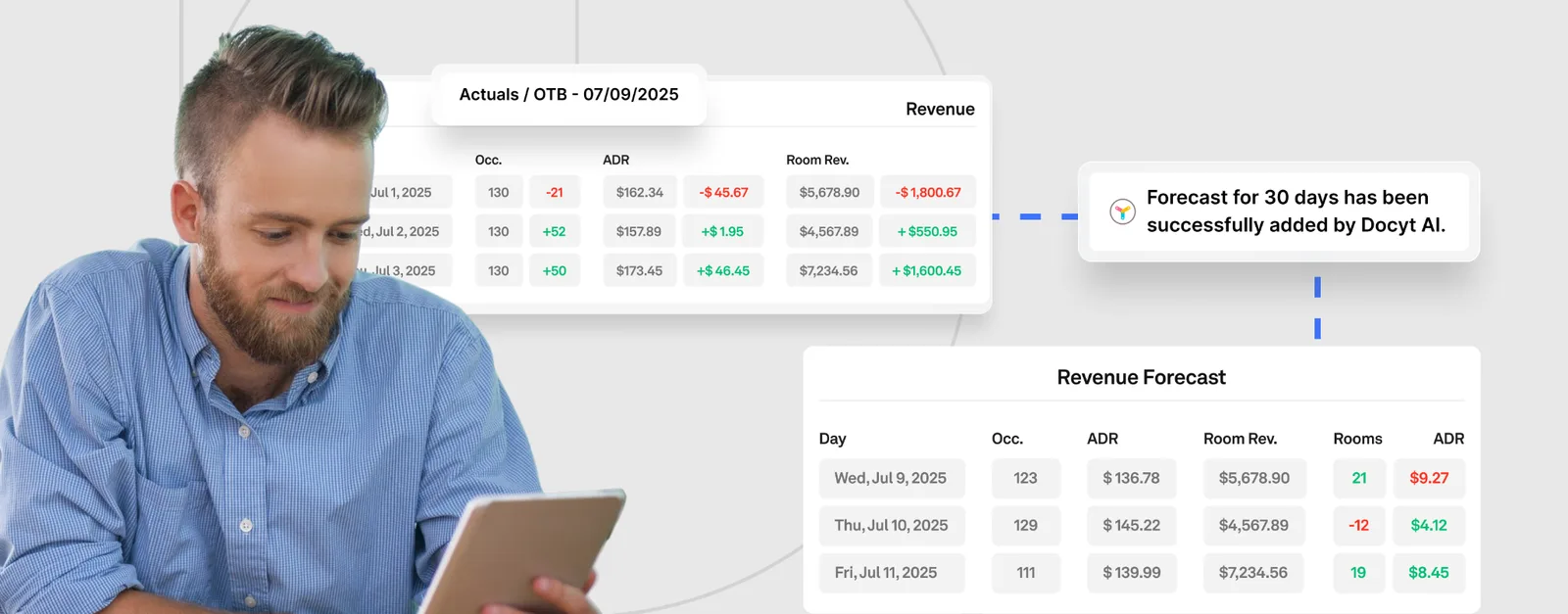
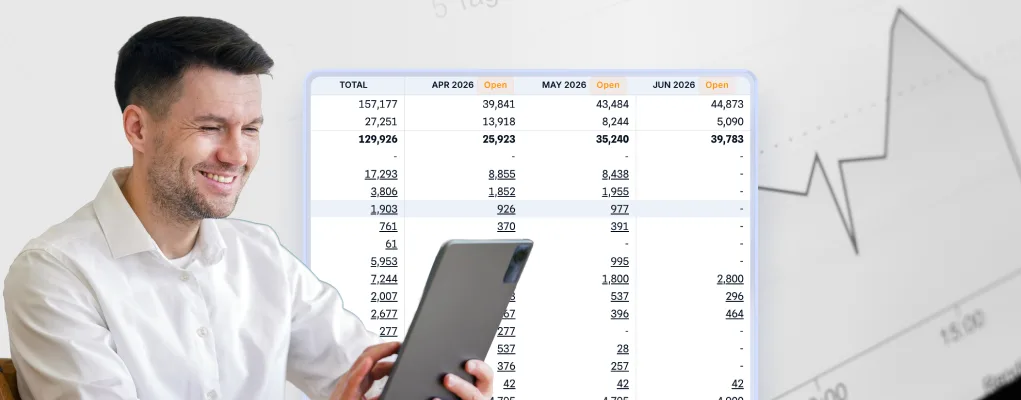
Because extraction, categorization, and reconciliation run together, the books stay current throughout the month. In practice, this reduces manual review effort by over 90%, allowing teams to move from data correction to decision-making.- Administrators can track the supply costs weekly, even daily, without waiting for finalized statements.
- Contractors can evaluate their cash position instantly before committing to new work, and live reporting does more than show numbers. It allows teams to adjust spend, refine pricing, control costs, and plan growth with confidence.
- Administrators can track the supply costs weekly, even daily, without waiting for finalized statements.
An agency can rebalance ad budgets mid-cycle. A clinic can spot rising supply costs before they eat into profit. With Docyt, reporting moves from just a summary to active decision support whenever needed.
Each of the above features addresses a distinct stage of accounting and removes a specific constraint. Today, many accounting platforms offer individual automation features that perform well on their own. However, the real impact of AI-powered accounting automation lies in integration.
AI Accounting Automation – Where the Whole Is Greater Than the Sum of Its Parts
Each AI automation capability strengthens a specific stage of the accounting process. But more often than not, these capabilities operate independently, and as a result, the benefits tend to remain limited.
For example, when document capture, categorization, and reconciliation function as separate modules, human supervision must reconnect them at every step. So the administrative burden may change its form, but it still exists in regular automation.
The true power of AI-powered accounting automation lies not in individual features but in seamless integration that enables accurate accounting.
- When invoice extraction feeds intelligent categorization, and categorization feeds real-time reconciliation, the entire workflow flows without a hiccup.
- Data enters, processes, matches, and reports within a connected sequence, which eliminates the need for continuous manual oversight at every stage.
In short, the administrative load remains under control even as transaction volume grows. At scale, the workload remains stable while operations expand.
Firms using Docyt commonly expand operational capacity up to 3× without increasing staff, because the system absorbs routine accounting workload automatically.
Docyt AI: End-to-End AI Accounting Platform for Cash-Basis Firms
Docyt operates as a single AI-powered accounting automationsystem in which every capability reinforces the next. Because the workflow is integrated from start to finish, the benefits compound rather than accumulate independently.
For a growing cash-basis firm, this integration delivers measurable impact.
- Manual data entry ceases to define the accounting process, and leadership attention is spent on optimization and strategy.
- Financial clarity aligns with daily operations, reports reflect present conditions, and growth proceeds without the need to increase staffing.
To understand how these features operate together within your environment, schedule a free Docyt demoand observe the system in action.