
Growth plans inside firms often look solid on paper, yet something keeps delaying execution month after month. The close takes longer than expected, and each cycle leaves behind loose ends that never fully resolve. Teams push through deadlines, but the numbers arrive too late to support forward work. As more clients come in, delays begin influencing how the firm operates.
A pattern becomes visible over time. A stretched close does more than take time, it limits what the firm can take on next. Advisory gets postponed, senior bandwidth gets absorbed, and client conversations stay reactive. Growth continues, yet progress feels slower than it should.
Where the Process Quietly Breaks
Month-end close has always involved complexity, and no one expects it to be simple. Multi-entity structures, intercompany entries, and client delays are part of the job. The issue begins earlier, in how data enters and moves through the system.
Entries arrive with gaps, classifications vary across the team, and small inconsistencies move forward unchecked. By the time reconciliation begins, those inconsistencies are already spread across reports. The close turns into a process of correcting and verifying at the same time.
Timelines expand as work that should have been handled earlier reaches the final stage together. Senior staff step in to resolve issues, while juniors continue feeding new entries into the system. Progress happens, yet it depends heavily on manual intervention.
More Effort, Same Outcome
Most firms respond by tightening processes or adding staff. These steps do bring relief for a short period, especially at lower volumes. But as complexity increases, the erratic patterns slowly return.
They often show up as:
- Rework cycles every month
- Senior staff handling basic corrections
- Numbers changing after reporting
- Clients asking for updates before completion
The Shift Starts Before the Close
Firms that move past this stage approach the problem differently. Close is no longer treated as a monthly task that needs better execution. Focus moves toward how work flows across the entire period, with priority on resolving issues as they appear.
AI-based platforms like Docyt operate around this principle. Data gets validated and organized as it enters, so entries do not carry unresolved issues into later stages.
At a practical level:
- Data ingestion flags incomplete or inconsistent entries immediately
- Categorization stays consistent because entries carry context
- Reconciliation becomes faster since most issues are already addressed
- Each layer supports the next, keeping the system stable even as volume grows
When the Close Finally Shortens
Earlier stages handled cleanly make the close lighter and more predictable. Teams no longer chase missing pieces or correct earlier work. The close becomes a final check where numbers are already aligned.
A one-day close becomes achievable under these conditions. Speed comes from work being handled across the month in smaller, controlled steps rather than being concentrated at the end.
The impact shows up clearly:
- Teams revisit fewer entries
- Seniors focus on review instead of correction
- Timelines stay consistent
- Delivered numbers remain stable
The close begins supporting growth instead of slowing it down.
Time Opens the Next Door
Freed time creates capacity, yet capacity alone does not move a firm into advisory. Reliable numbers and the ability to act on them are equally important. Higher-value services depend on both.
AI Accounting Solutions like Docyt extend beyond the close and support this transition.
Capabilities include:
- Live dashboards with current financials
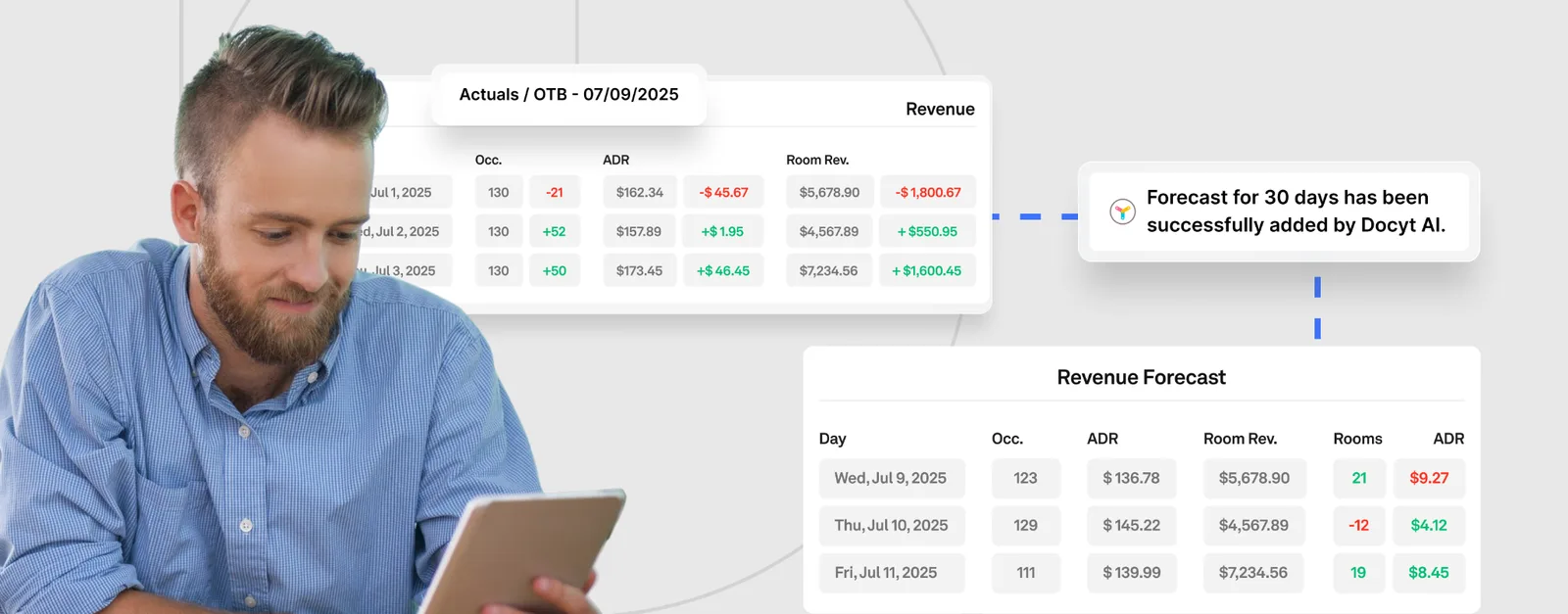
- Forecasting tools for planning
- Consolidated reporting across entities
- Spend tracking and benchmarking
Teams move from reporting past activity to guiding future decisions once these tools are in place.
Docyt AI – The System Built for Firms Ready to Scale
AI accounting platforms like Docyt operate as a complete layer across the workflow by connecting data entry, categorization, reconciliation, and close into one continuous process.
For firms moving toward advisory and higher-value services, the right foundation comes from clean data flowing continuously and a close that completes quickly. Teams gain the space required to focus on forward-looking work, while strategic conversations become easier to deliver.
Docyt fits naturally at this stage as a system that supports expansion without adding complexity. A connected workflow replaces fragmented processes, allowing firms to scale with confidence while maintaining quality across every client.
For more details on how this works in practice, schedule a free Docyt demo.