Your Hotel’s P&L Is Already a Week Behind. Here’s What AI Does About It
By the time your profit and loss statement lands in your inbox, the month it describes is already history.
You’re reading numbers from three weeks ago. The staffing decisions, the vendor payments, the F&B spend, the rate adjustments – all of it happened before you had a clear financial picture of whether you could afford it. For most hotel owners and operators, this isn’t a minor inconvenience. It’s a structural problem that compounds every single month. AHLA’s 2025 State of the Industry report found that property-level costs rose faster than revenue in 2024, with operations, maintenance, and IT expenses each climbing nearly 5% – making timely financial visibility more consequential than ever.
The hotel industry has accepted delayed financial visibility as the cost of doing business. It doesn’t have to be.
Why Your P&L Arrives Late – and What That Actually Costs You
The traditional hotel accounting cycle was designed for a world where transactions were manual, reconciliations were done by hand, and the night audit was the only source of daily financial data. That world doesn’t exist anymore – but most hotel accounting systems still operate as if it does.
Here’s what a typical monthly close looks like in practice: the month ends, your accounting team spends the next 7 to 10 days chasing invoices, reconciling bank statements, matching PMS revenue against the general ledger, and coding transactions that never got properly categorized. Then the P&L goes through review. By the time it reaches you, it’s the 10th or 15th of the following month.
You are now 6 weeks behind the revenue and cost decisions that shaped those numbers.
In practice, the traditional close cycle stretches 8–12 days past month-end. Accounting teams spend the first one to two weeks of every month chasing invoices, reconciling bank statements, matching PMS revenue to the general ledger, and resolving coding errors that accumulated over the prior 30 days. During that gap, operators are flying blind. Pricing decisions get made without current margin data. Labor scheduling happens without knowing whether last week ran over budget. Vendor invoices get approved without visibility into where the department stands against its monthly target.
The cost of delayed financials isn’t a line item. It’s invisible – decisions made without the information needed to make them well.
What a Real-Time P&L Actually Means for Hotel Operations
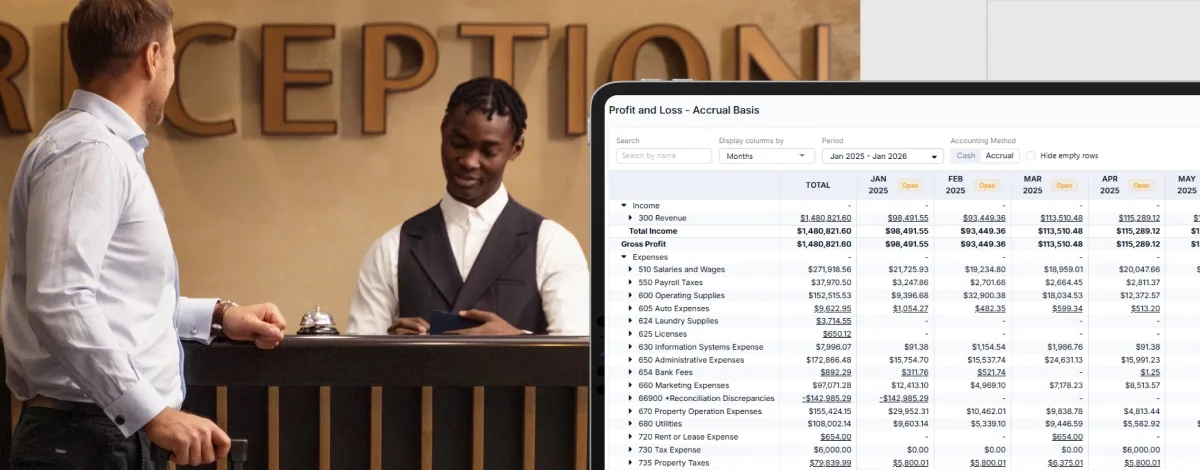
A real-time P&L isn’t a live feed of every transaction. It’s something more operationally useful: a continuously updated, reconciled financial picture of your property that reflects today’s performance, not last month’s.
This matters because hotel profitability is driven by daily decisions:
- Rate management – Is your current ADR delivering the margin you need, or are you filling rooms at rates that don’t cover incremental costs?
- Labor deployment – Is today’s staffing level in line with today’s occupancy, or is your labor cost running 3 points above the budget you set two months ago? AHLA’s 2026 industry survey found operating costs are the top challenge cited by hotel owners.
- Vendor spend – Is the F&B department on track this week, or has a purchasing pattern shifted that will show up as a variance at month-end?
None of these questions can be answered well with a P&L that’s two weeks old. They require financial data that moves at the same speed as operations.
The AI Accounting Difference: Continuous, Not Periodic
Traditional accounting is periodic – transactions pile up, then get processed in batches, then get reviewed, then get finalized. Every step introduces delay.
AI-powered accounting is continuous. Transactions are categorized the moment they occur. Bank feeds are reconciled automatically each day. Exceptions are flagged in real time rather than discovered during a monthly review. The result is a P&L that reflects current reality rather than historical record.
Docyt’s AI Agents make this possible through a layered approach:
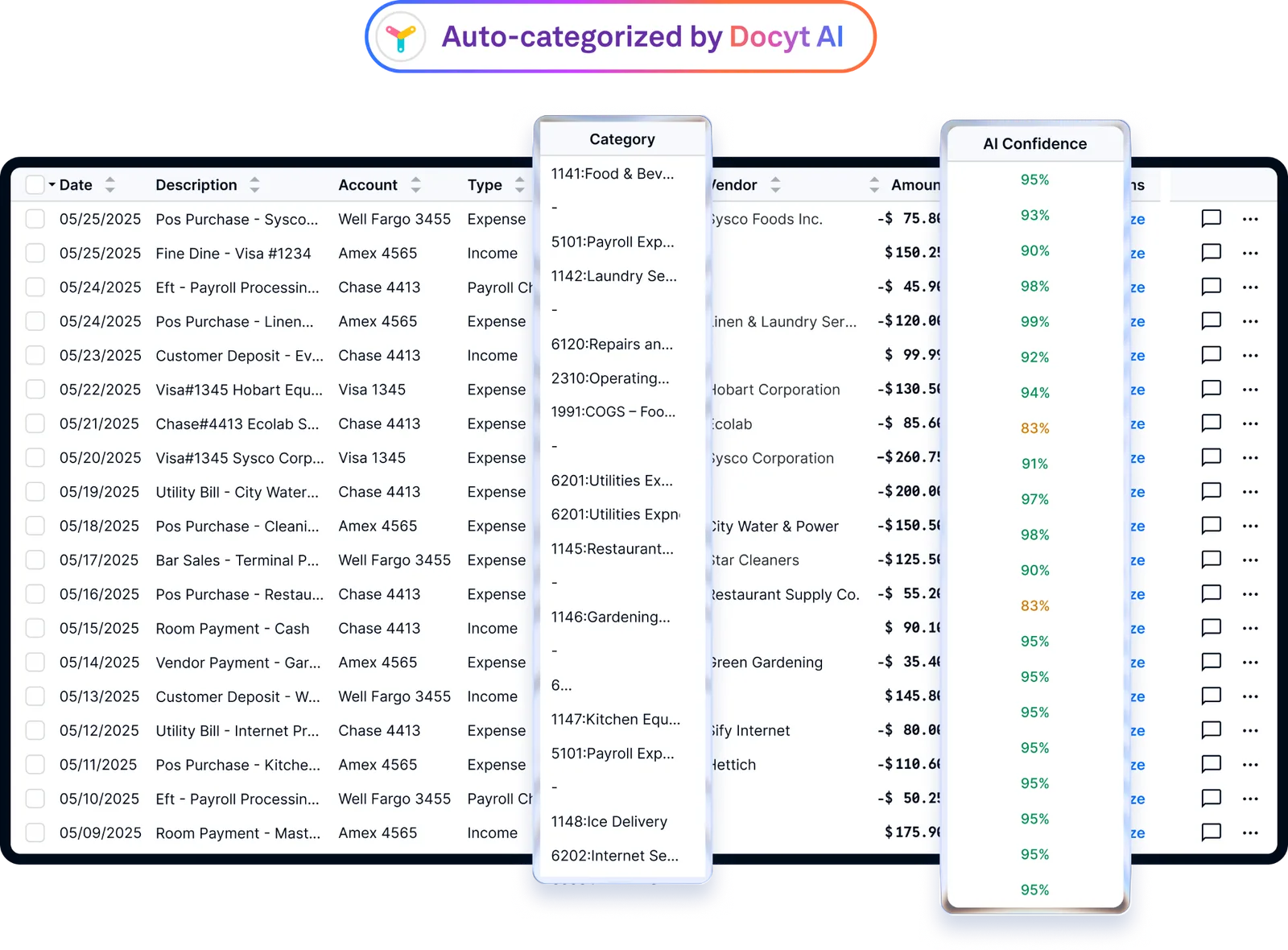
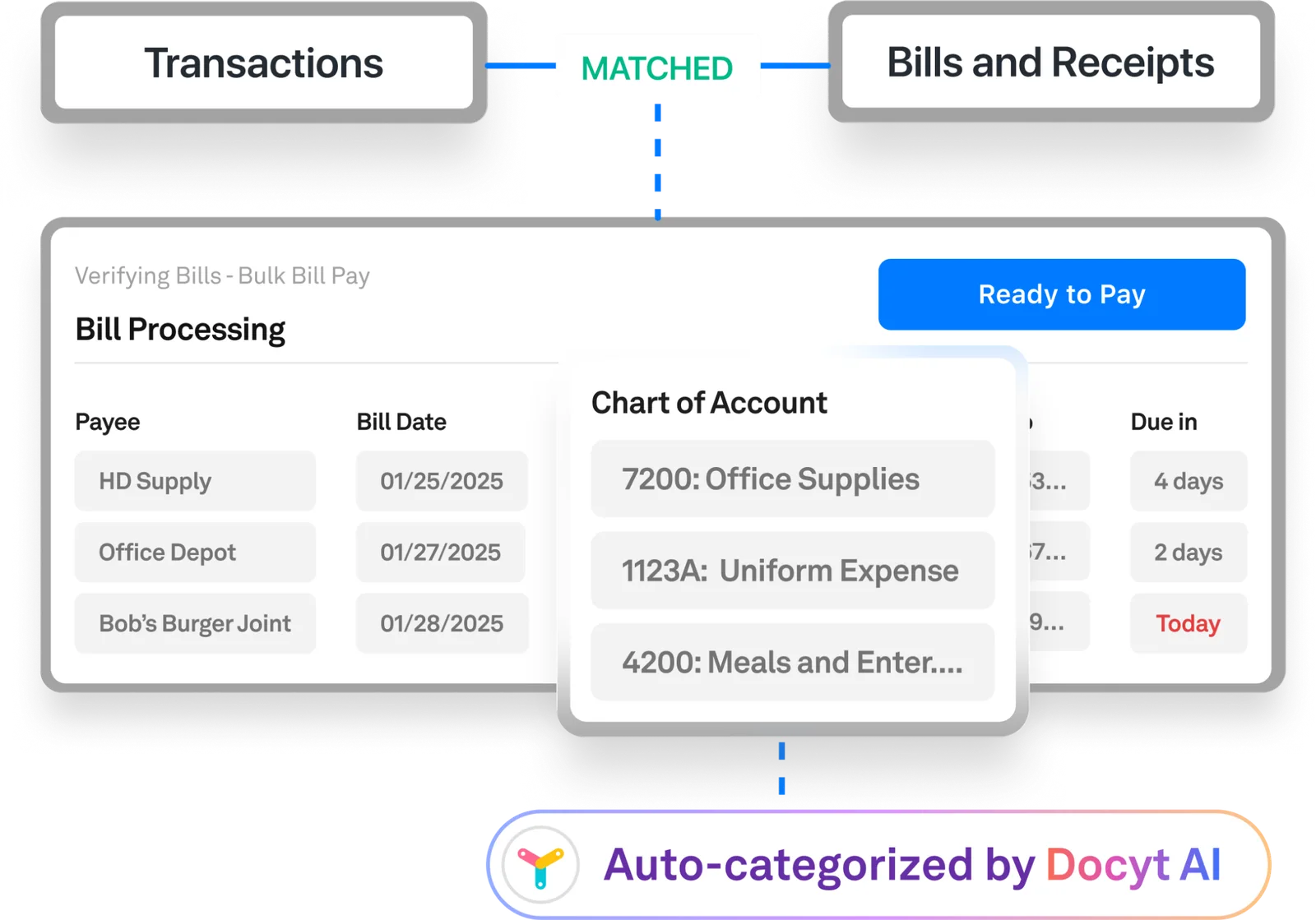
The Categorization Agent
processes every incoming transaction – invoices, bank feed entries, PMS revenue, payroll – and applies it to the correct account with 99%+ accuracy. There’s no end-of-month coding sprint because categorization happens continuously as transactions flow in.
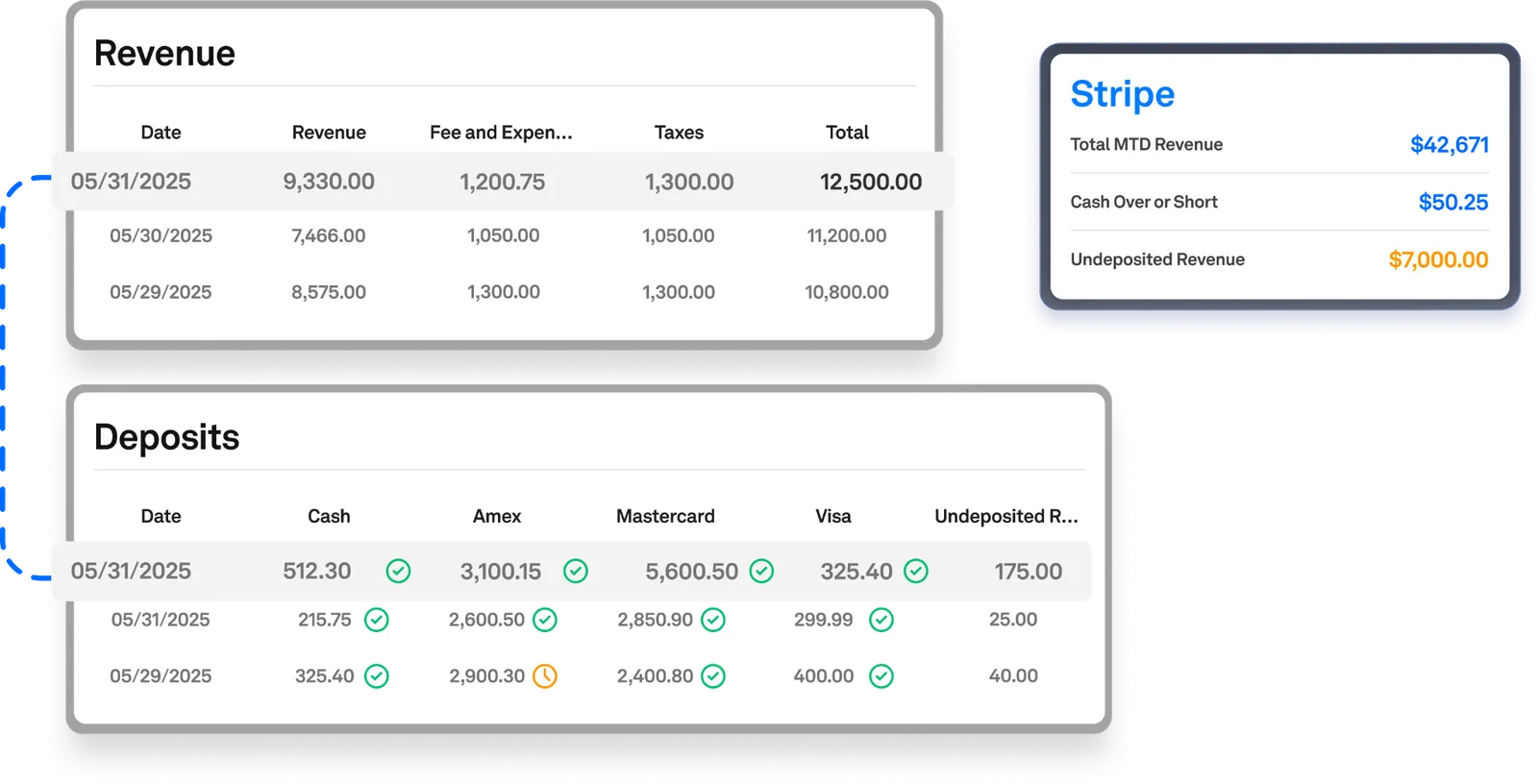
The Reconciliation Agent
matches transactions across your PMS, POS, bank feed, and general ledger with 100% accuracy. Discrepancies are flagged immediately. Revenue that hits your PMS but doesn’t reconcile to the bank gets surfaced within hours, not weeks.
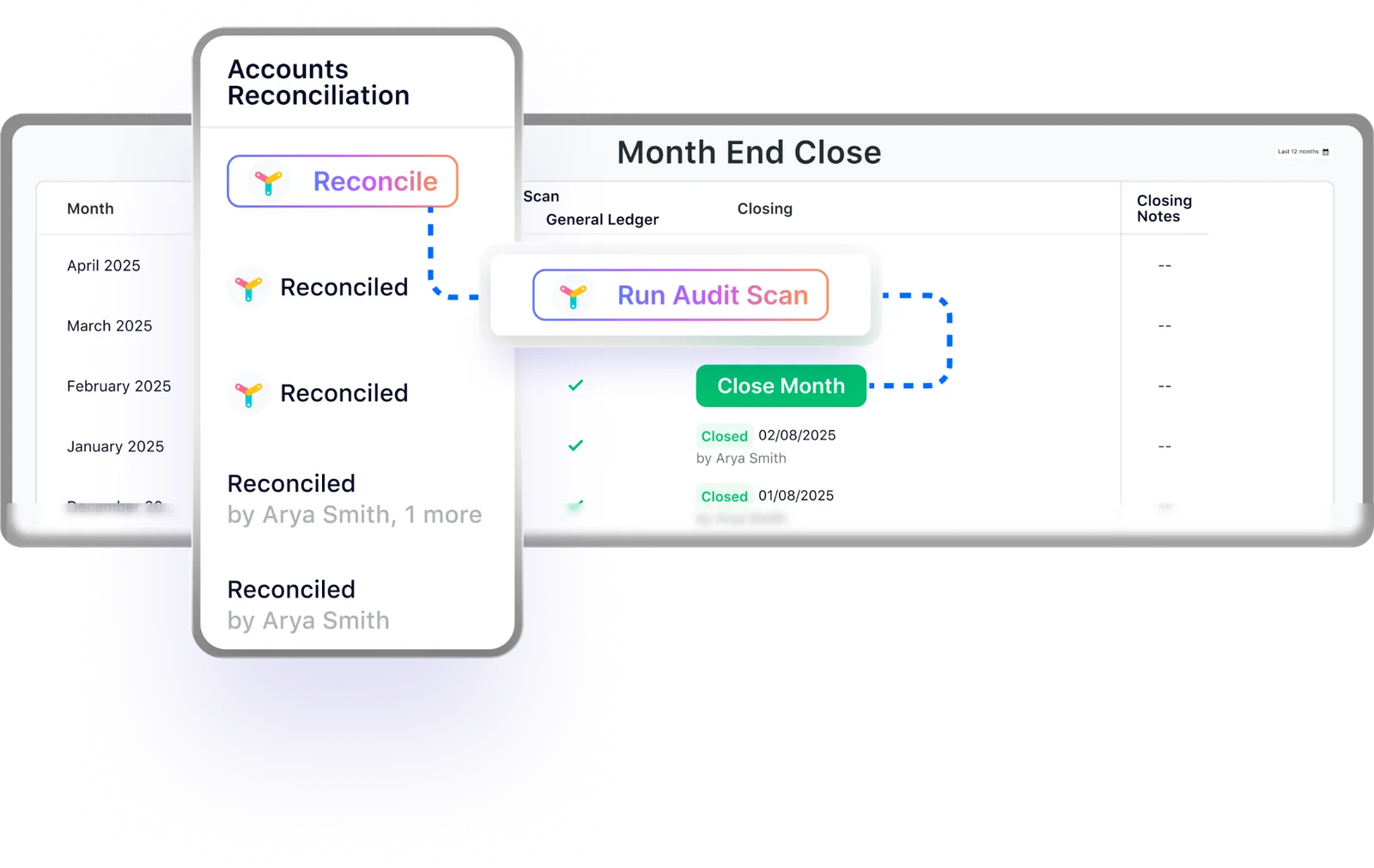
The Month-End Closing Agent
handles the structured close – journal entries, accruals, department-level finalization – so that when month-end arrives, the books are largely already done. Closing time drops from 8–12 days to 1–3 days.
The output isn’t just a faster close. It’s a P&L that reflects today’s performance because the underlying accounting never stopped running.
What You Can Do With Current Financial Data That You Can’t Do With Stale Data
The operational value of a real-time P&L shows up most clearly in the decisions it unlocks.
Mid-month course corrections.
If labor is running 4% over budget on the 15th, you still have 15 days to adjust scheduling. With a month-end P&L, you’d find out on the 10th of next month – after the full month of overrun has already occurred.
Pricing decisions grounded in margin.
If your current ADR is filling rooms but your F&B and labor costs have shifted, your actual GOP per occupied room may be lower than your rate strategy assumes. A current P&L tells you that today. A lagged one tells you next month.
Owner and investor conversations that aren’t backward-looking
Whether you’re reporting to a management company, an ownership group, or an outside investor, presenting current financials rather than last month’s numbers is a fundamentally different conversation. You’re talking about the business as it stands, not as it stood.
Faster anomaly response.
When Docyt’s Variance & Flux Anomaly detection identifies an unusual spend pattern, it flags it in real time. You see it before it becomes a month-end surprise. You deal with it when it can still be addressed.
The Bookkeeping Pipeline That Makes It Possible
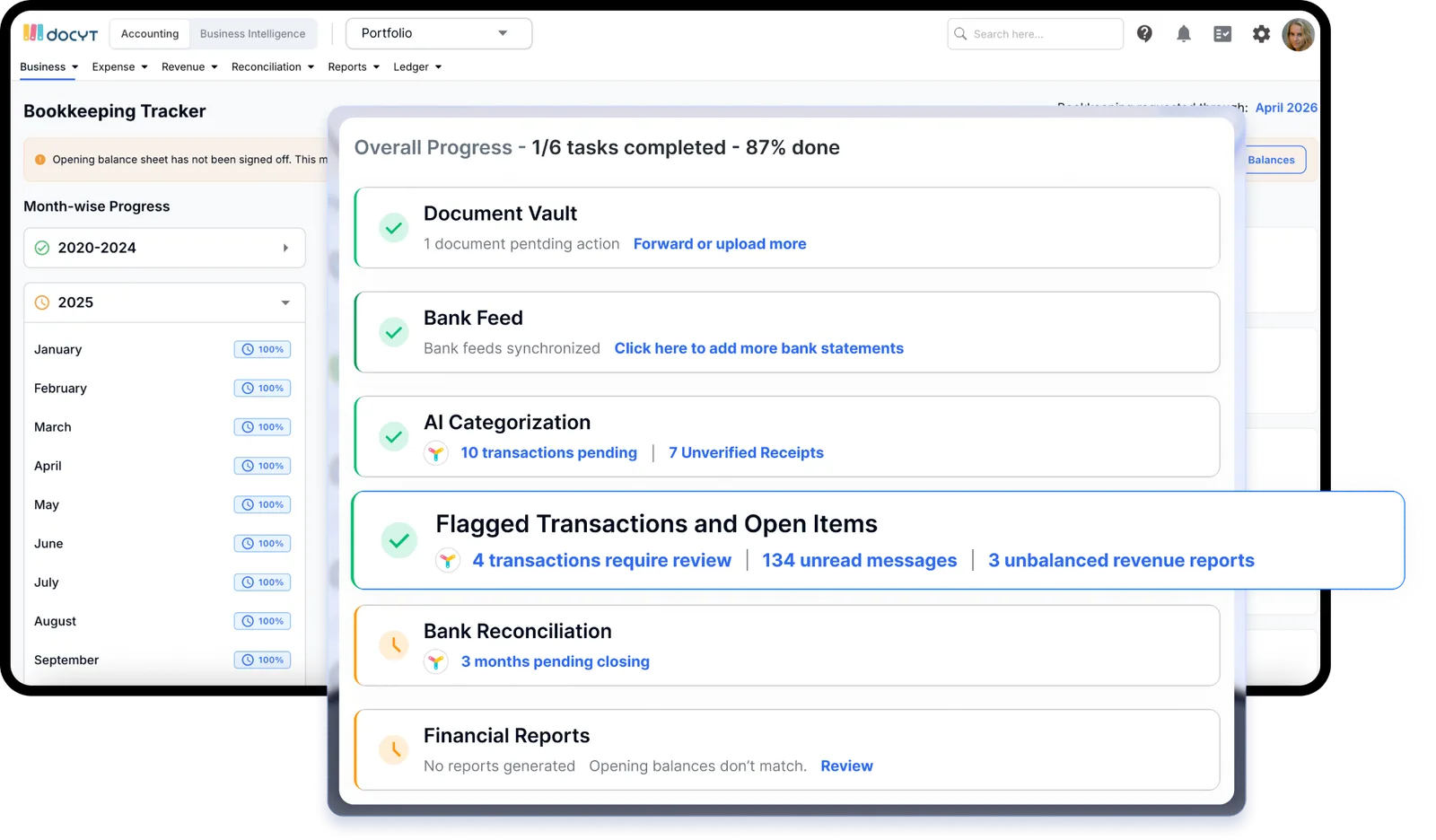
Docyt’s approach to continuous accounting follows a defined workflow that eliminates the traditional batch-processing bottleneck:
Vault → Bank Feed → AI Categorization → Flagged Items → Bank Reconciliation → Financials Done
Each step is automated. Each handoff happens in real time. The AI categorizes every transaction as it arrives. Flagged items – exceptions, mismatches, uncoded entries – are surfaced immediately rather than queuing up for a manual review sprint. Bank reconciliation runs continuously against live bank feeds from 25,000+ financial institutions.
The financials aren’t done on the 10th of the following month. They’re done.
This isn’t a faster version of the old process. It’s a different process entirely – one where the accounting engine runs continuously in the background while your team focuses on decisions and exceptions rather than data entry and reconciliation.
From Monthly Report to Daily Operating Tool
Hotel owners who shift from periodic to continuous accounting describe the same transformation: the P&L stops being a report and starts being a tool.
When your financials are current, you stop asking “how did we do last month?” and start asking “where do we stand today, and what do we need to do about it?” That’s the difference between accounting as a compliance function and accounting as a strategic one.
Your hotel generates financial data every hour of every day. Room charges, F&B transactions, payroll runs, vendor invoices, OTA deposits – the information is there. The only question is how quickly it gets processed into insight.
AI accounting closes that gap.
The P&L doesn’t have to be a week behind. With Docyt, it reflects today.
Docyt is an AI-powered accounting and business intelligence solution purpose-built for hotel owners and operators. Learn how real-time accounting transforms financial visibility across your hotel portfolio at www.docyt.com.