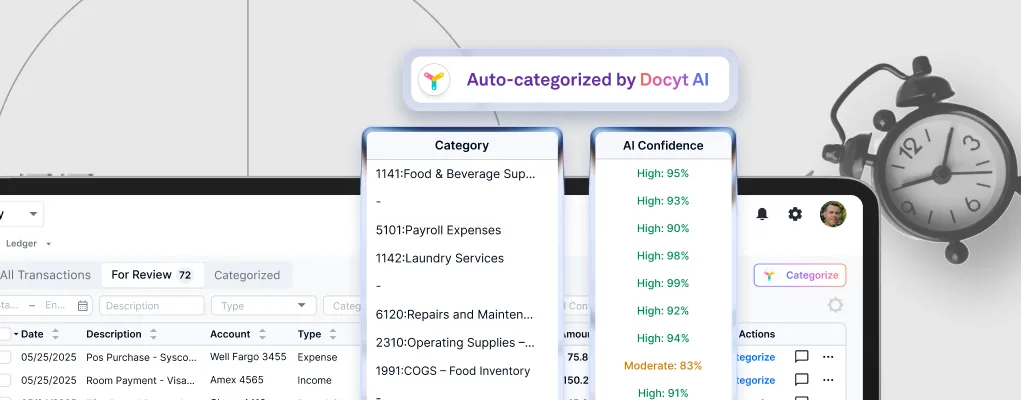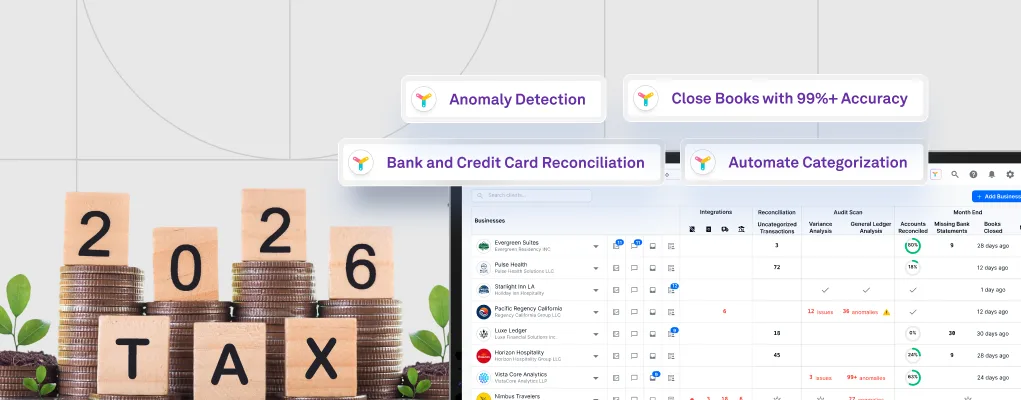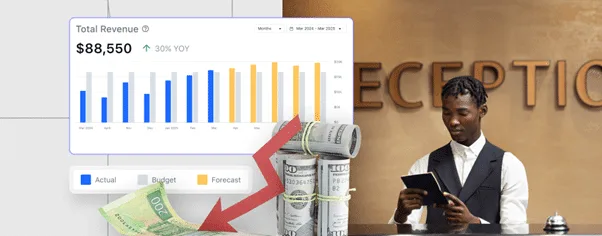
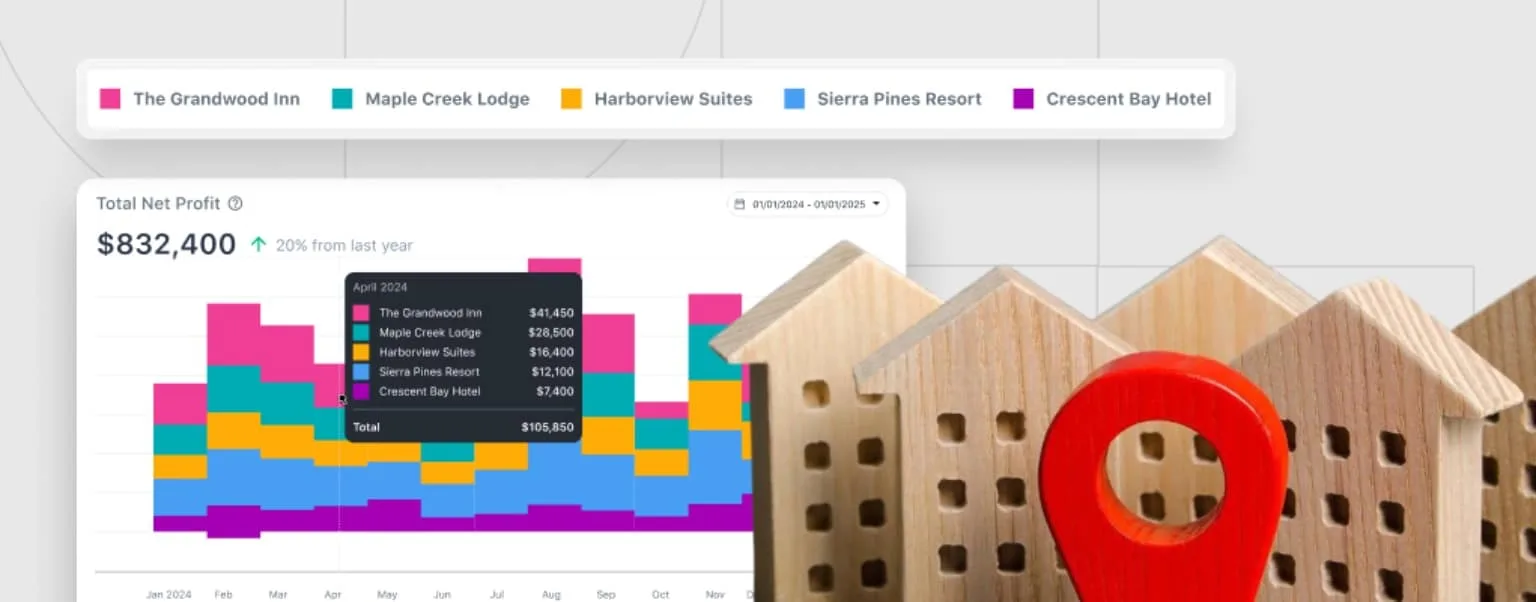
Most AI accounting platforms cover the base across multiple entities. They pull bank feeds, read receipts, connect to POS and payroll, and generate consolidated reports that look complete at first glance. This is true for most property management accounting solutions in the market today.
For a small set of properties, this setup works because the gaps stay contained within limited volume.
Scale changes the pressure on that base. Data lands in batches, reconciliation waits for review, and each property closes on its own timeline. You end up reading numbers that belong to a past window while decisions demand clarity in the present.
The base works, but scale exposes what it cannot handle.
Automation exists, but it often stops early in the flow. Data gets captured and tagged, yet the last mile still depends on checks, edits, and coordination between teams who see only part of the picture. A shared vendor bill, a payroll split, or a delayed deposit match can expand into hours of correction across properties. This is where most real estate accounting automation falls short in practice.
These systems support multi-entity accounting, but they do not sustain control at scale. The limitation shows up as delay, rework, and missed timing. The limitation shows up as delay, rework, and missed timing, even in tools positioned as advanced multi-property bookkeeping software.
Better AI accounting systems close the gaps between data capture, reconciliation, and action, turning accounting into something that keeps pace with operations.
But the best multi-property accounting software that are actively redefining this category take it further.
Docyt AI – The Only Multi-Property Accounting Software You Need
Docyt brings every layer into a single system where data moves through one path, stays aligned across properties, and updates as activity happens, without added steps or dependency on manual review.
It replaces a chain of separate tools with a unified core where revenue, expenses, reconciliation, and reporting operate together, keeping every property consistent as scale increases. This alone removes the gaps most systems leave behind and makes multi-property accounting manageable at scale. But this is only the starting point.
What sets Docyt apart is how it builds on this core with a set of capabilities designed for scale from the ground up.
These are not add-ons or isolated features. They work together to ensure that as the number of properties grows, accuracy stays intact, decisions stay timely, and operations remain under control within a single system.
Continuous Close Across Every Property
Most systems slow down at closing. Each property moves at its own pace, and the final view forms only after the slowest one completes its cycle. That delay grows with every new location added to the portfolio.
Docyt removes that dependency by keeping books in a constant state of completion. Transactions, documents, and matches move together as they occur, so there is no separate phase where things get tied up at the end.
- Transactions match with bank and card feeds as they come in
- Documents attach to entries within the same flow
- Books stay current across all properties at the same time
This changes how you read your numbers. You are not checking which properties have closed or waiting for alignment. In effect, you are looking at a portfolio that is already in sync.
Real-Time Unit Economics Inside the Books
Here is where most systems fall short. They show totals, and expect you to build the story behind those totals somewhere else. That extra step breaks alignment over time, because the analysis lives outside the books.
With Docyt, unit economics sit inside the same system that records transactions. Revenue, cost, and margins can be viewed per unit, per department, and per property without needing separate models.
- Cost per room, per shift, or per unit updates with each transaction
- Department-level performance stays tied to financial data
- Property comparisons reflect actual operating drivers, not just totals
You are no longer stitching together numbers from different places. The system shows what is happening and why, in the same view. Once that clarity is in place, the next issue becomes how cleanly transactions reflect real operations.
Handling the Mess of Multi-Property Operations
A single supplier bill covers three locations. Payroll runs through one entity but supports five. Funds move across accounts based on need during the week. None of this fits neatly into isolated accounting structures, yet it happens every day.
Docyt handles this at the point of entry, where transactions can be split and assigned across entities in one step, without recreating them later through adjustments.
- Split invoices and card spends across multiple properties
- Apply repeat rules for known vendors
- Track internal transfers within the same system
When this layer is missing, teams spend time recreating what already happened, just to make the books reflect it. With Docyt, each property reflects its share from the start, so shared activity does not turn into cleanup work later. That clean base makes it possible to enforce consistency across all properties.
System-Level Control Across All Properties
- Standard structure across every property from day one
- Consistent classification across transactions and reports
- Clean comparisons without rework during consolidation
Most platforms provide visibility across properties, but control remains uneven because each location follows its own structure. Over time, small differences build up, and alignment becomes a task that never quite ends.
Docyt approaches this differently. It enforces a common framework across entities as part of daily workflows, so consistency is maintained without separate effort.
This is what allows a growing portfolio to stay aligned. Every property follows the same logic, and comparisons remain reliable as scale increases. Once consistency is built in, the system can support faster decisions across the portfolio.
Decision Speed Across 50+ Properties
Speed becomes the real constraint at this level. When decisions depend on a central team reviewing numbers, delays stack up across properties and response time stretches beyond what operations demand.
What changes with Docyt is where decisions happen. Instead of routing everything upward, it gives each manager access to the exact metrics tied to their role, so action happens closer to the ground.
- Managers see targets and current performance together
- Access stays limited to what each role requires
- Actions happen within the same cycle, not after review
Without this, teams work with partial data and wait for approvals that slow everything down. With it, decisions move as fast as the business itself. And when that speed exists across all properties, the system starts to operate as a single unit.
Running 50+ Properties as One System
Everything comes together here, but not in a neat checklist. Continuous close keeps numbers current while unit economics explains what those numbers mean, and clean handling of transactions keeps the base accurate without extra work.
Control stays consistent across properties because the structure is enforced within the system, and decisions move faster because access is placed where it is needed. Remove one layer, and delays or rework begin to return in subtle ways.
With all layers working together, managing a large portfolio stops feeling like coordination across separate entities. It becomes a system that runs in sync, where visibility, accuracy, and action move together without waiting on each other. This is what it takes to truly streamline property accounting at scale.
The difference becomes clear when you see it in action across your own properties. Schedule a Docyt demo to see how this next-gen multi-property accounting solution works within your portfolio.